Latest From Our Blog

Explore our latest articles on English grammar, vocabulary, writing, and language learning.

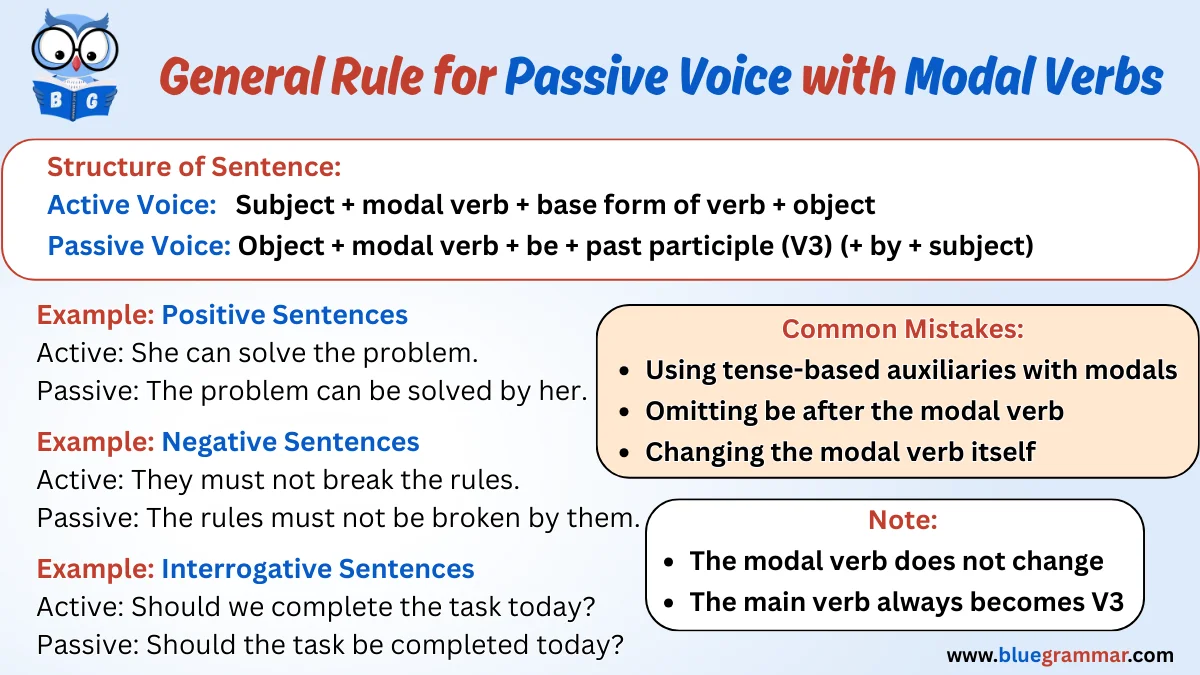
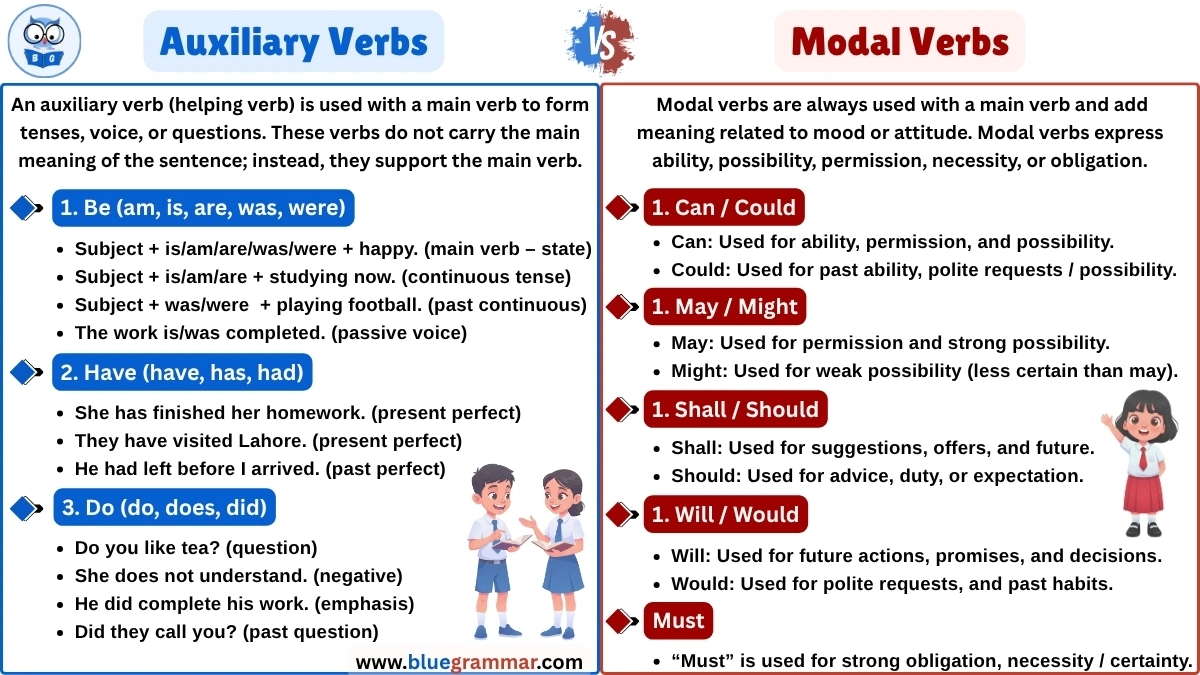
General Rule for Passive Voice with Modal Verbs

Sentences that contain modal verbs such as can, could, may, might, must, should, will, would, and ought to are converted into the passive voice using a different structure from simple or perfect tenses. In such sentences, the modal verb remains
Read More

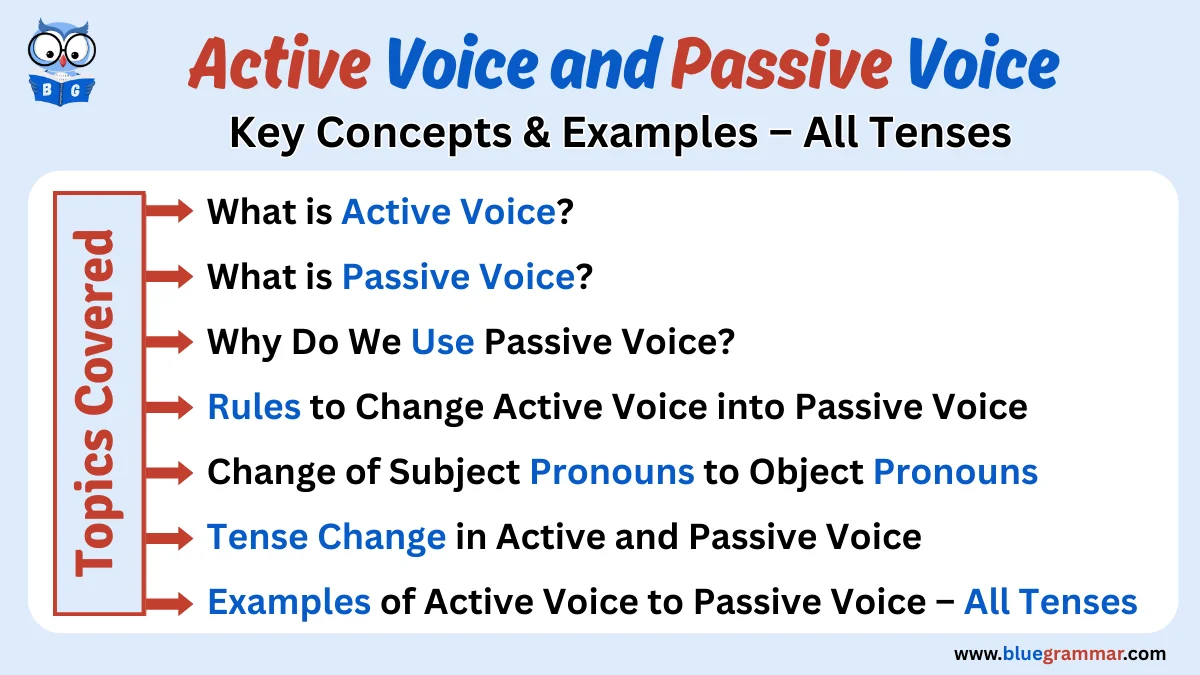
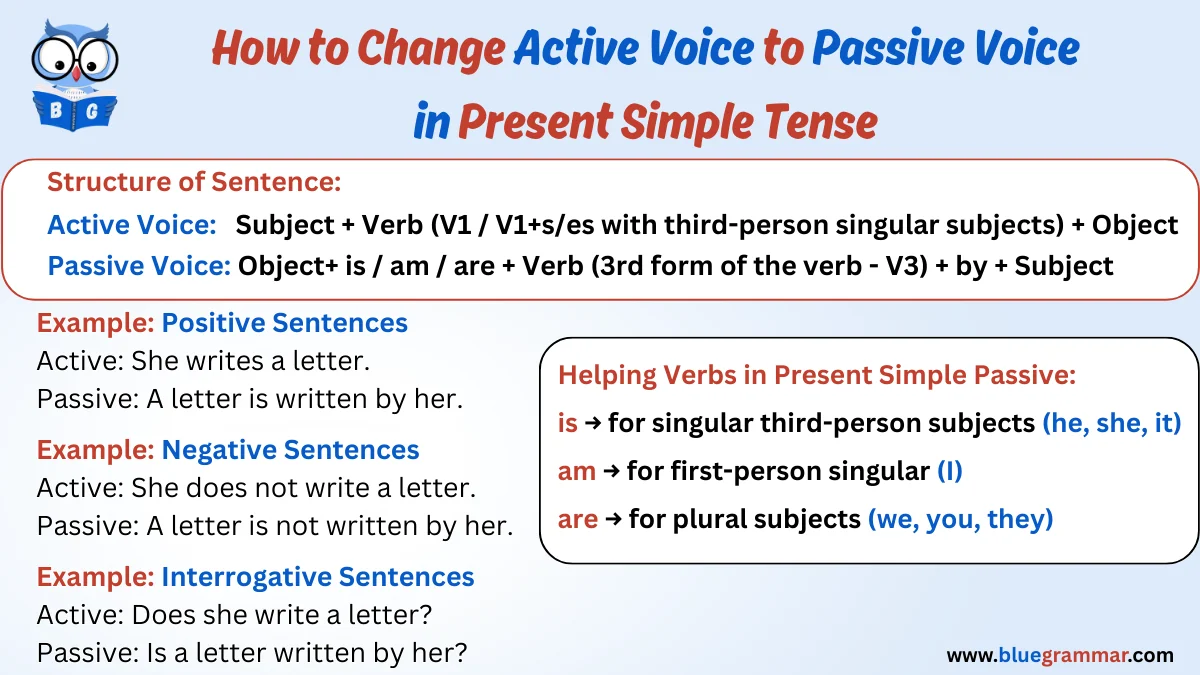
Active Voice and Passive Voice | Key Concepts & Examples

Active voice and passive voice are two important concepts in English grammar that describe the relationship between the subject and the action of a sentence. Understanding the difference between them helps learners write more clearly, accurately, and effectively. Active voice
Read More

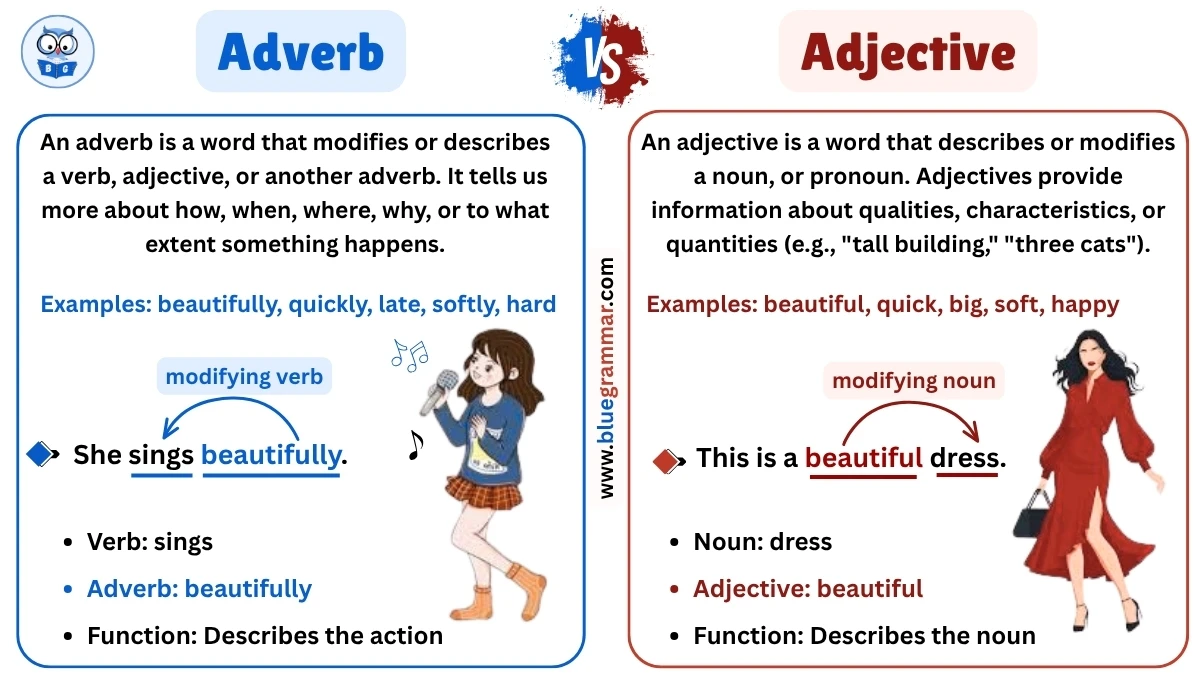
Adverbs vs Adjectives: Confusing Parts of Speech

Understanding the difference between adverbs and adjectives is essential for improving your English grammar and writing skills. These two parts of speech are often confused because they both describe other words. However, they serve different purposes and follow different rules.
Read More

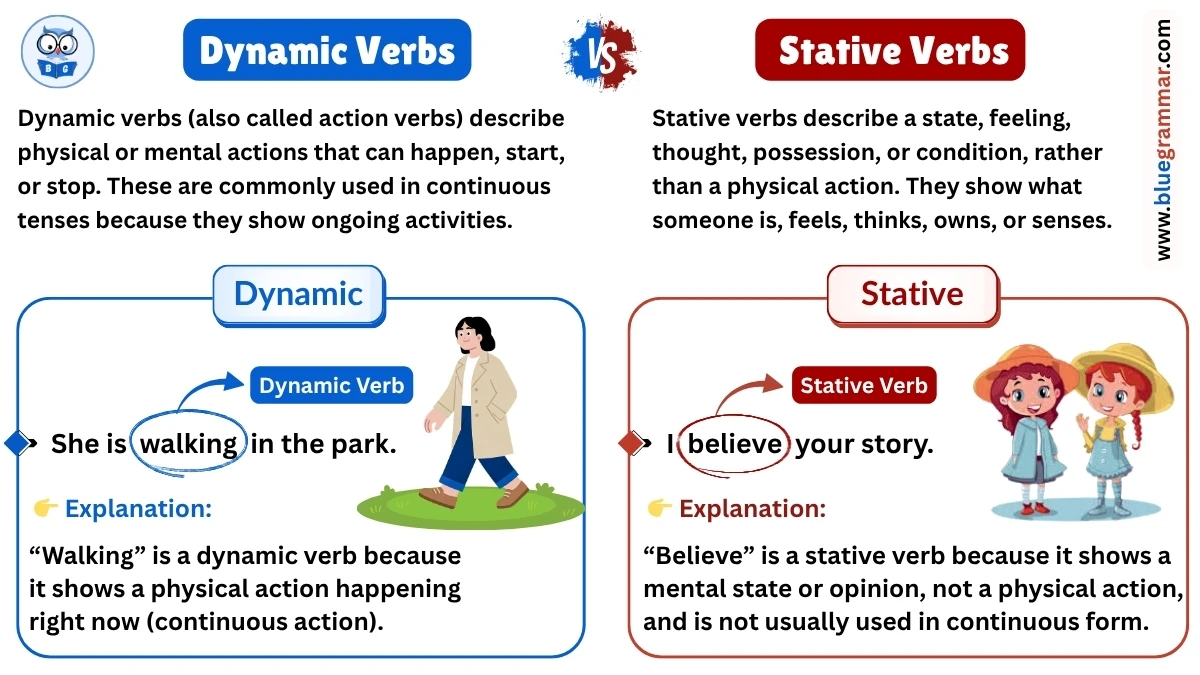
Dynamic (Action) Verbs vs Stative Verbs (With Clear Examples)

Understanding the difference between stative verbs and dynamic (action) verbs is important for using correct tenses and expressing meaning clearly. These two types of verbs describe different kinds of actions or states. <ins class="adsbygoogle" style="display:block" data-ad-client="ca-pub-3566357338441853" data-ad-slot="1898937421" data-ad-format="auto" data-full-width-responsive="true"> (adsbygoogle
Read More