
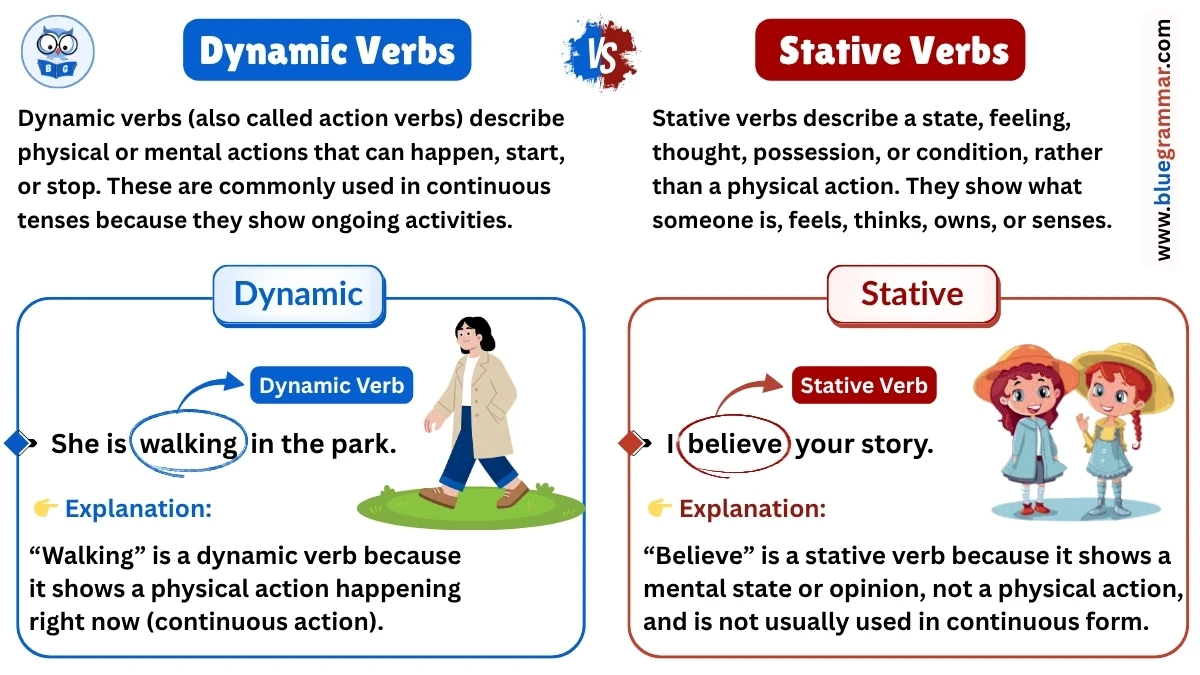
Understanding the difference between stative verbs and dynamic (action) verbs is important for using correct tenses and expressing meaning clearly. These two types of verbs describe different kinds of actions or states.
Stative Verbs
Stative verbs describe a state, feeling, thought, possession, or condition, rather than a physical action. They show what someone is, feels, thinks, owns, or senses. These verbs are usually not used in continuous (-ing) tenses because they do not express ongoing actions. For example, in “I know the answer,” the verb “know” shows a mental state, not an action. Similarly, “She has a car” expresses possession. Stative verbs are commonly used to describe emotions, opinions, relationships, and senses.
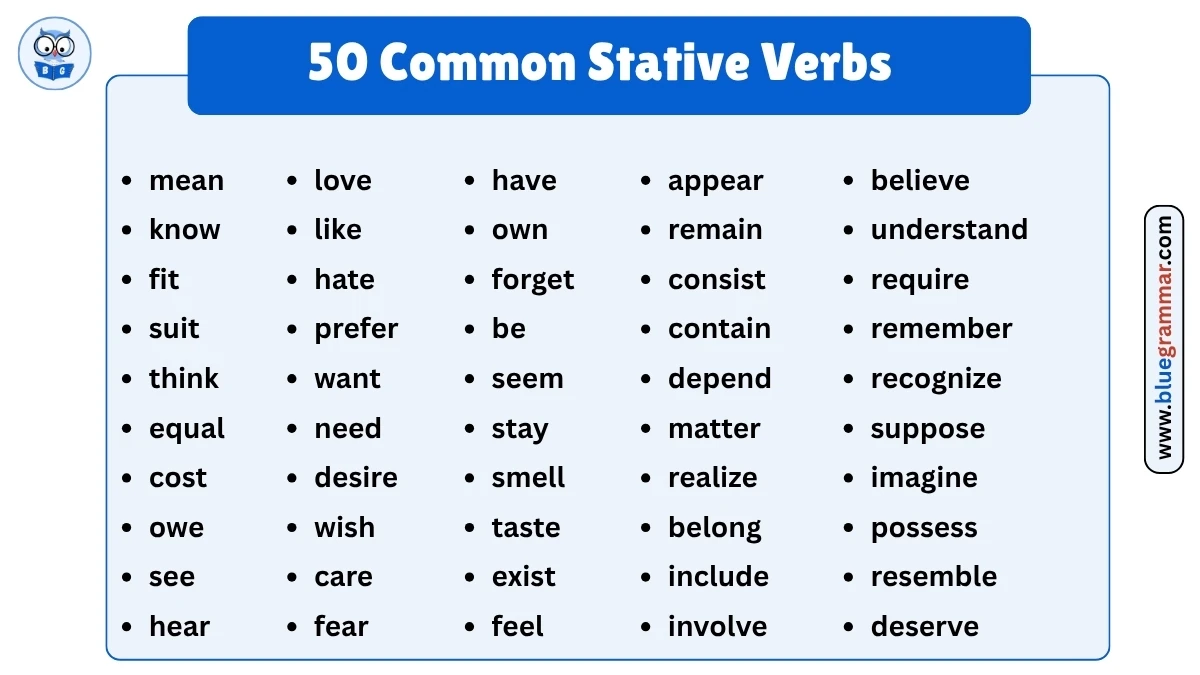
Common Stative Verbs
- Thinking/Opinion: know, believe, understand, think (opinion)
- Feelings: love, like, hate, prefer
- Possession: have, own, belong
- Senses: see, hear, smell, taste
- State/Being: seem, appear, be
Stative Verbs Examples
- I know the answer.
- She likes coffee.
- This book belongs to me.
- He seems tired.
- I see your point.
Dynamic (Action) Verbs
Dynamic verbs (also called action verbs) describe physical or mental actions that can happen, start, or stop. These verbs are commonly used in continuous (-ing) tenses because they show ongoing activities. For example, in “She is running,” the verb “running” shows a physical action in progress. Dynamic verbs can describe everyday actions like walking, eating, writing, or speaking.
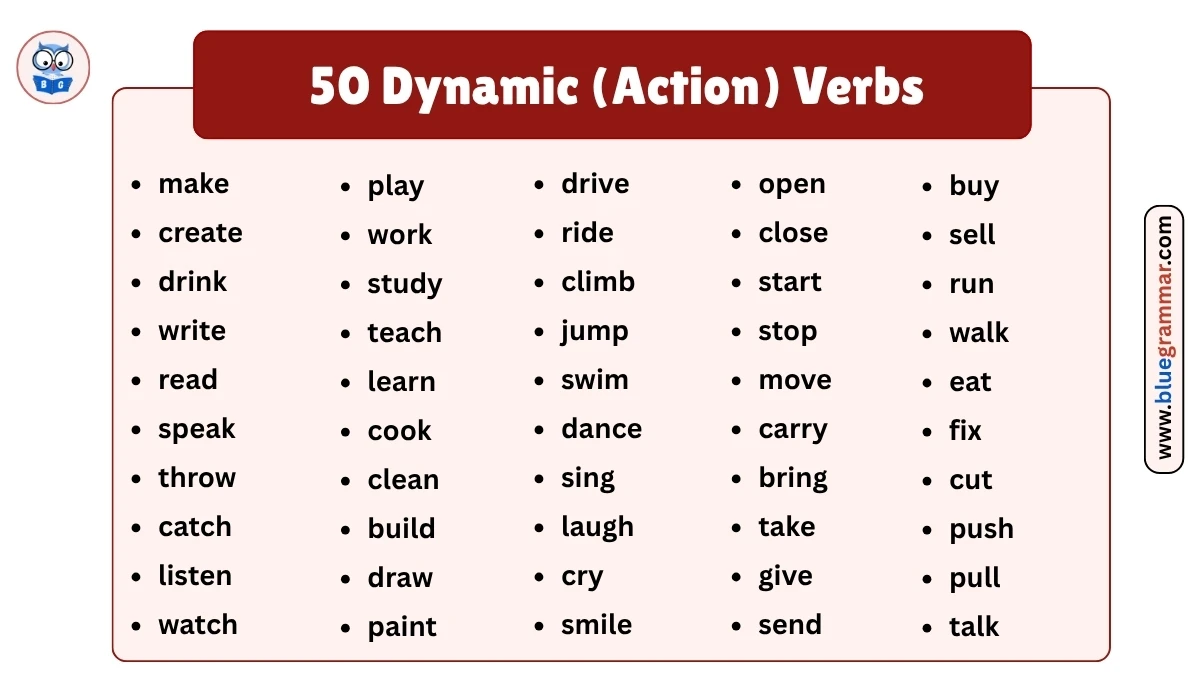
Common Dynamic Verbs
run, eat, write, speak, play, read, work, study, walk, cook
Dynamic Verbs Examples (With Explanation)
- She is running fast. (Physical action in progress)
- They are playing football. (Ongoing activity)
- I am writing an email. (Action happening now)
- He works every day. (Regular action)
- We are studying English. (Continuous action)
Common Mistakes and Confusions
1. Using stative verbs in continuous form
Incorrect: I am knowing the answer.
Correct: I know the answer.
2. Some verbs can be both (change meaning)
- I think you are right. (stative = opinion)
- I am thinking about the problem. (dynamic = action)
3. “Have” confusion
- I have a car. (stative = possession)
- I am having lunch. (dynamic = action)
4. “See” confusion
- I see your point. (stative = understand)
- I am seeing a doctor. (dynamic = meeting)
Summary
Stative verbs describe states, feelings, thoughts, or possession and are usually not used in continuous tenses, while dynamic (action) verbs describe actions and are commonly used in continuous forms. The key difference lies in whether the verb shows a state or an action. However, some verbs can act as both stative and dynamic depending on their meaning, such as think, have, and see. Understanding this distinction helps learners avoid common tense mistakes and use English more naturally and accurately.