Latest From Our Blog

Explore our latest articles on English grammar, vocabulary, writing, and language learning.

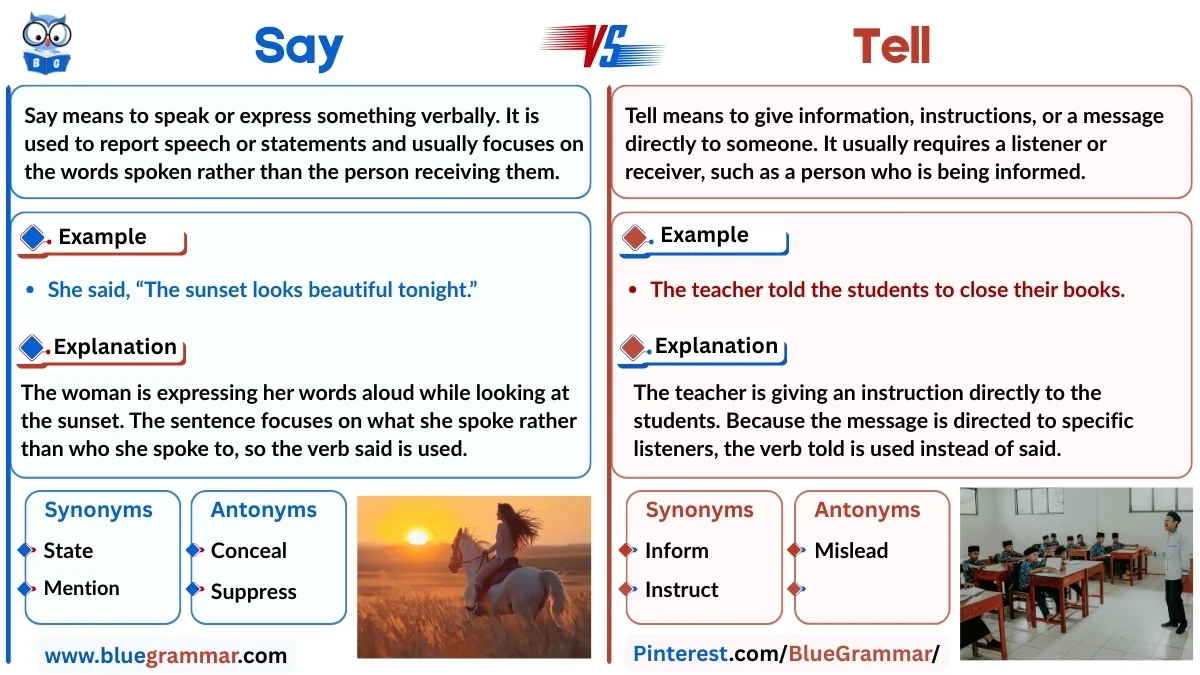
Say vs Tell | Explanation with Examples

Say vs. Tell: Difference and Examples The words say and tell are both commonly used when talking about communication, but they are used in different ways. Say focuses mainly on the words that someone speaks, while tell usually focuses on
Read More
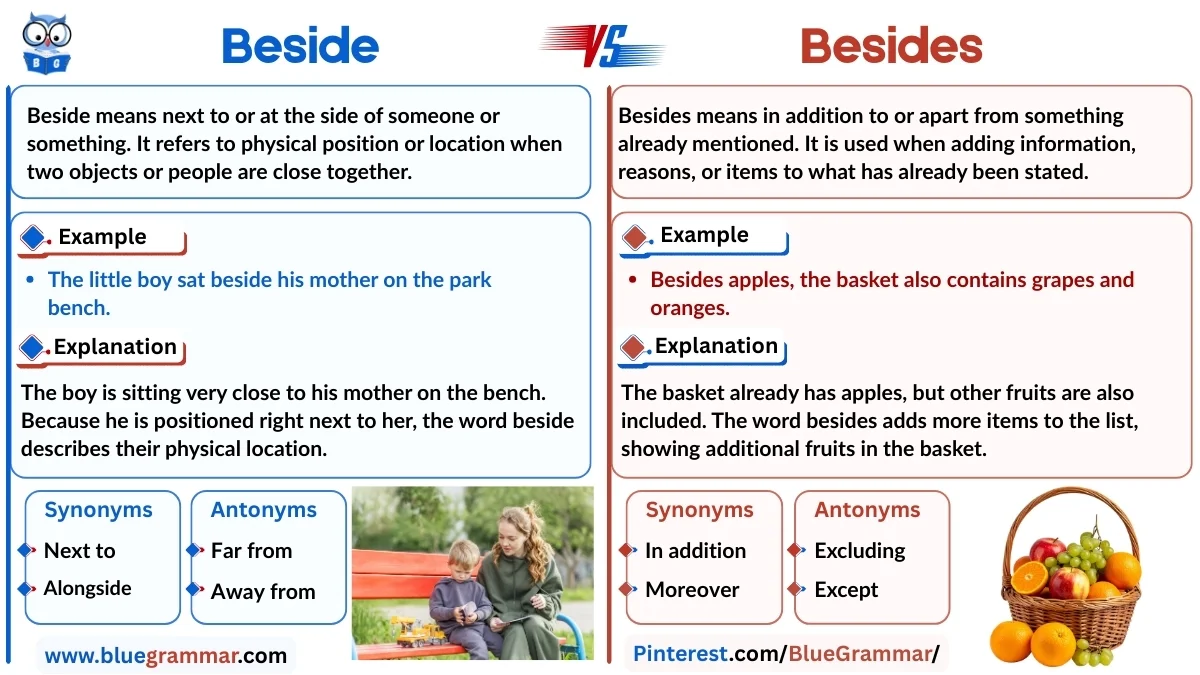
Beside vs Besides | Explanation with Examples

Beside vs. Besides: Difference and Examples The words beside and besides look very similar, but they have different meanings and uses. Beside usually refers to position or location, meaning “next to” or “at the side of” something. In contrast, besides
Read More

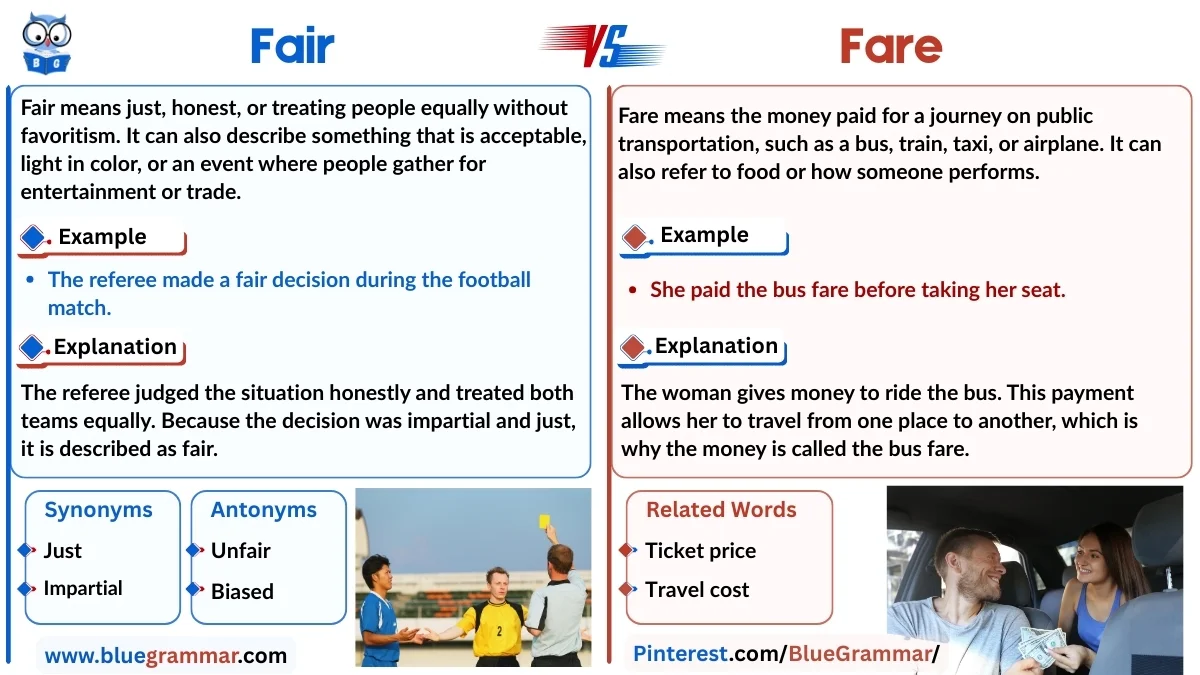
Fair vs Fare | Explanation with Examples

Fair vs. Fare: Difference and Examples The words fair and fare look similar and sound almost the same, but they have different meanings and uses. Fair can be an adjective meaning just, reasonable, or beautiful, and it can also be
Read More

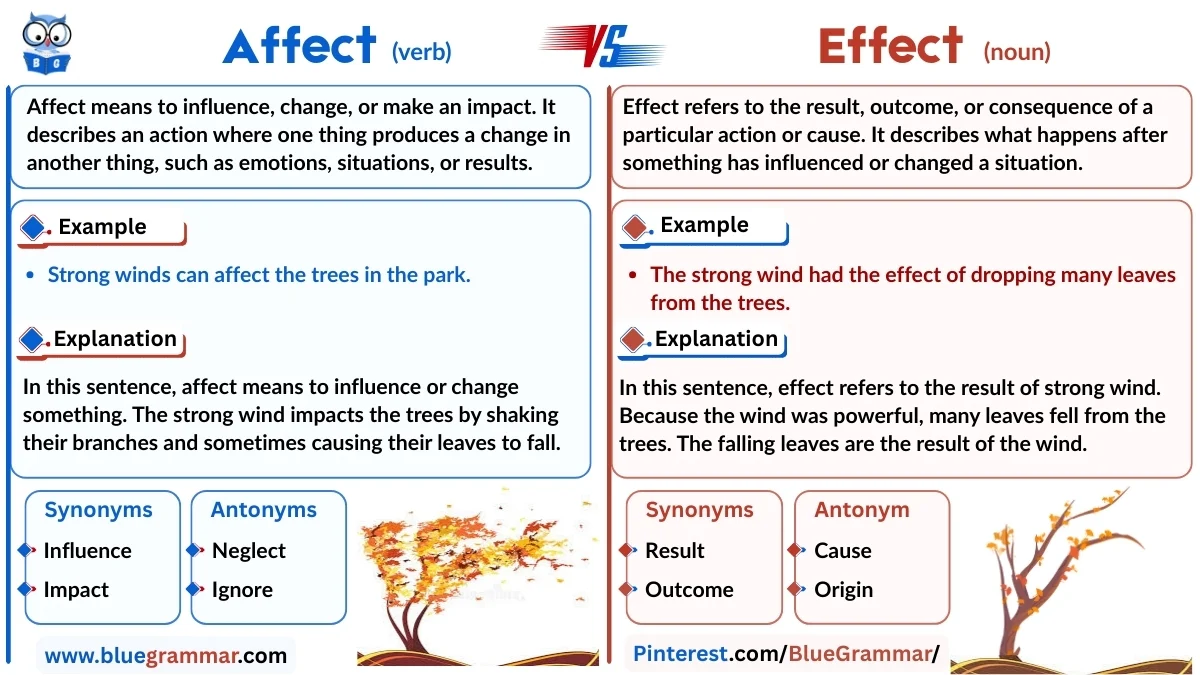
Affect vs Effect | Explanation with Examples

Affect vs. Effect: Difference and Examples The words affect and effect are commonly confused in English because they sound similar and are related in meaning. Affect is usually a verb that means to influence or make a change, while effect
Read More

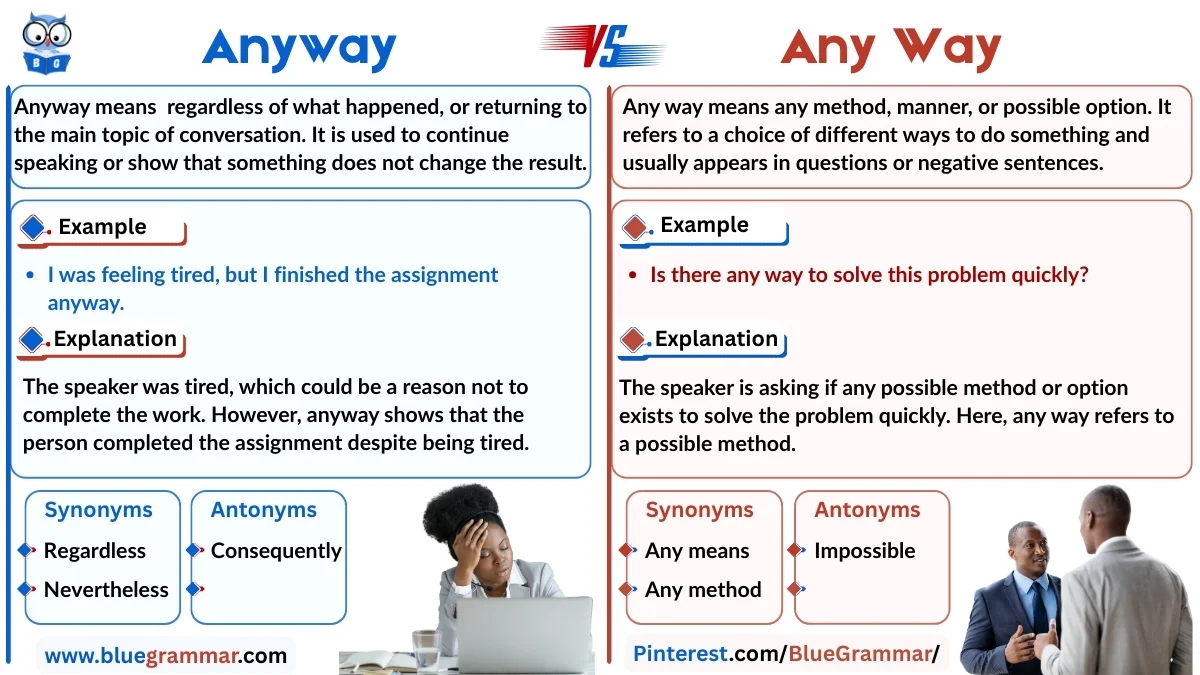
Anyway vs Any Way | Explanation with Examples

Anyway vs. Any Way: Difference and Examples The words anyway and any way look very similar, but they are used differently in English. Anyway is commonly used as an adverb to show continuation, conclusion, or something happening despite a situation.
Read More

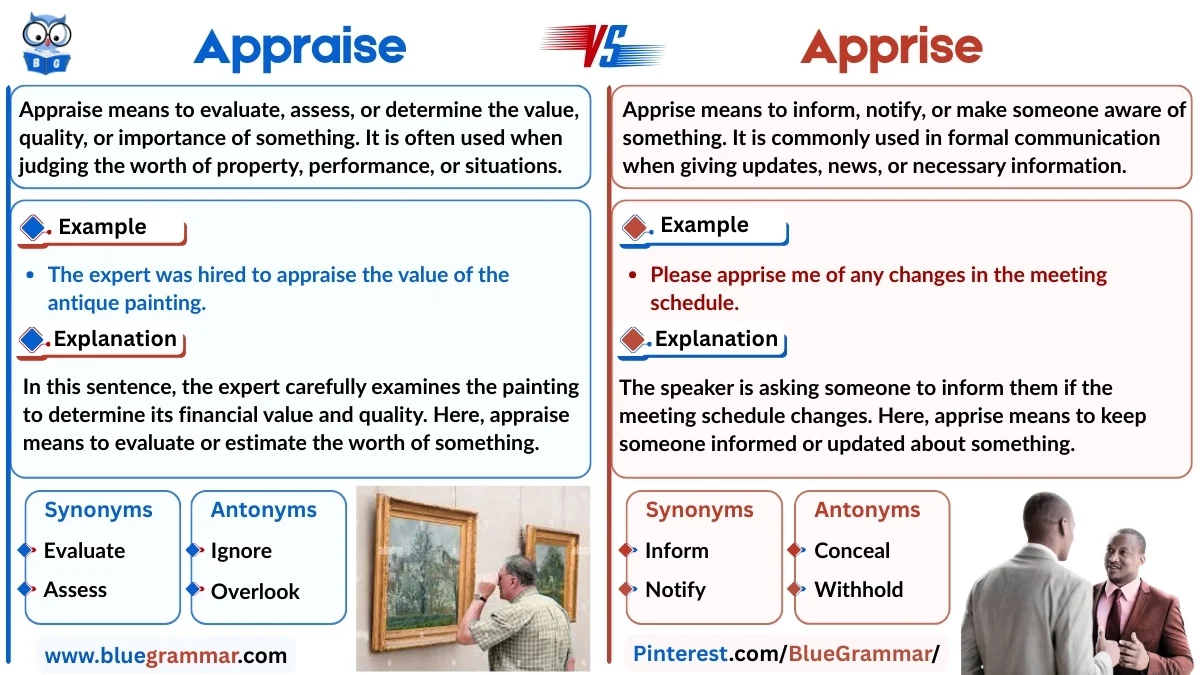
Appraise vs Apprise | Explanation with Examples

Appraise vs. Apprise: Difference and Examples The words appraise and apprise look very similar and are often confused because their spellings differ by only one letter. However, their meanings are completely different. Appraise relates to evaluating or assessing the value
Read More

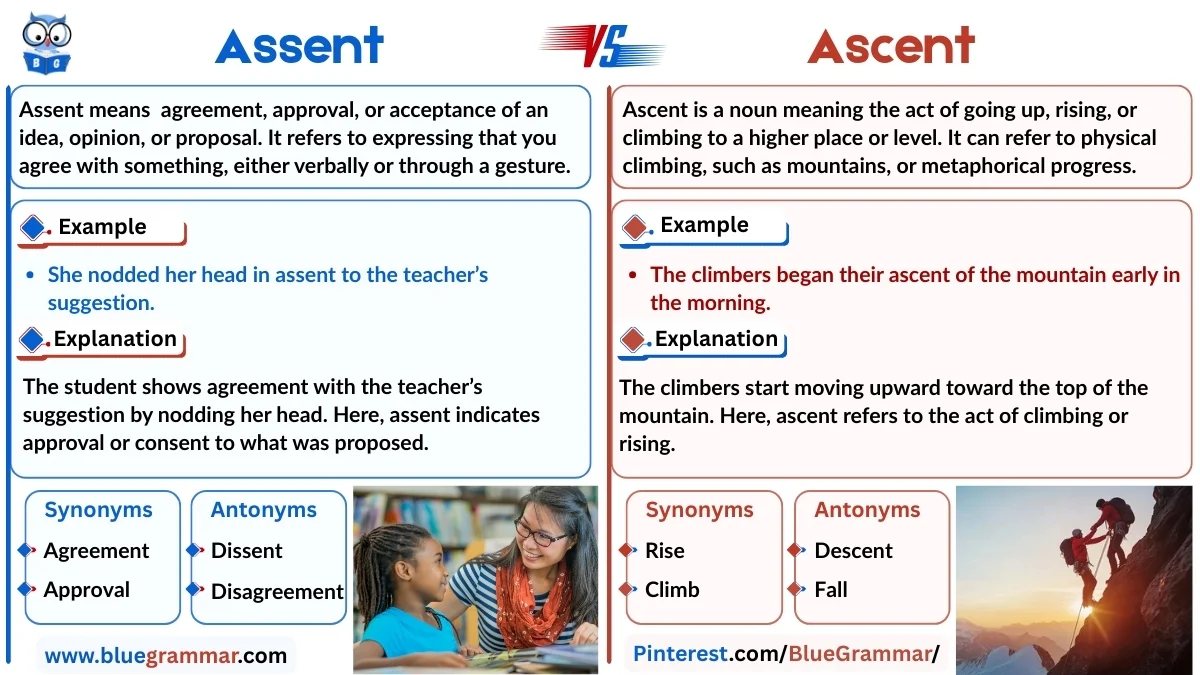
Assent vs Ascent | Explanation with Examples

Assent vs. Ascent: Difference and Examples The words assent and ascent sound the same but have very different meanings. Because they are pronounced alike, they are known as homophones, which often confuse English learners. Assent refers to agreement or approval,
Read More

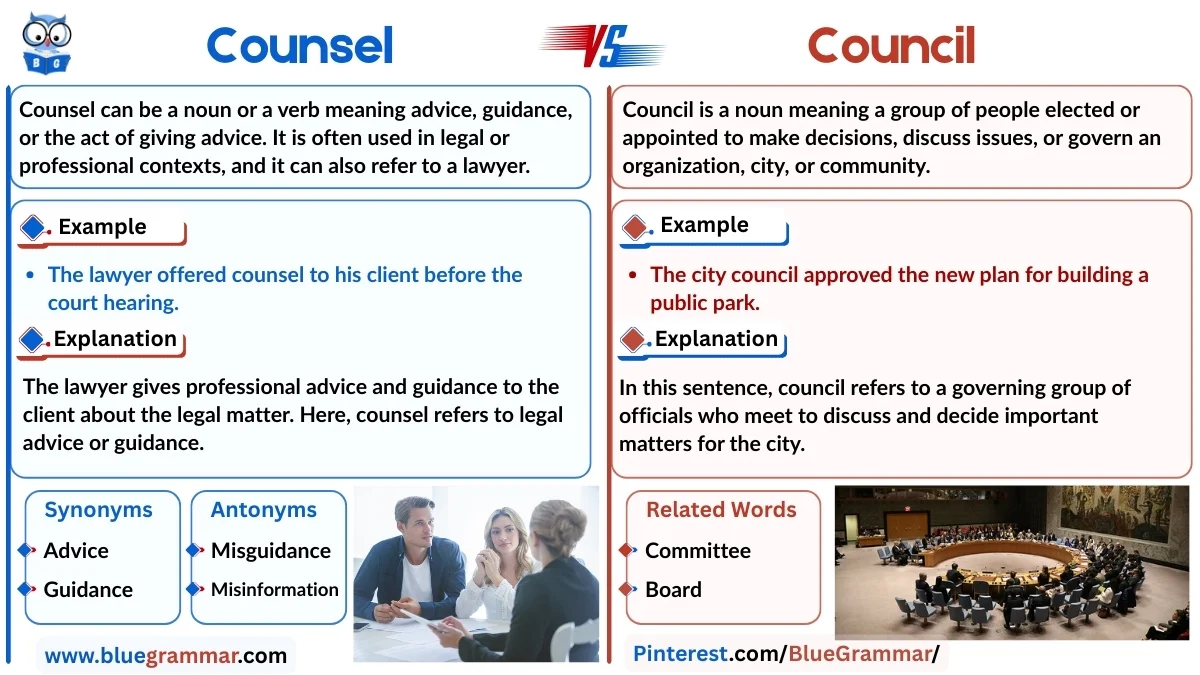
Counsel vs Council | Explanation with Examples

Counsel vs. Council: Difference and Examples The words counsel and council sound very similar, but they have different meanings and uses. Counsel usually refers to advice or guidance, and it can also refer to a lawyer. In contrast, council refers
Read More