Latest From Our Blog

Explore our latest articles on English grammar, vocabulary, writing, and language learning.

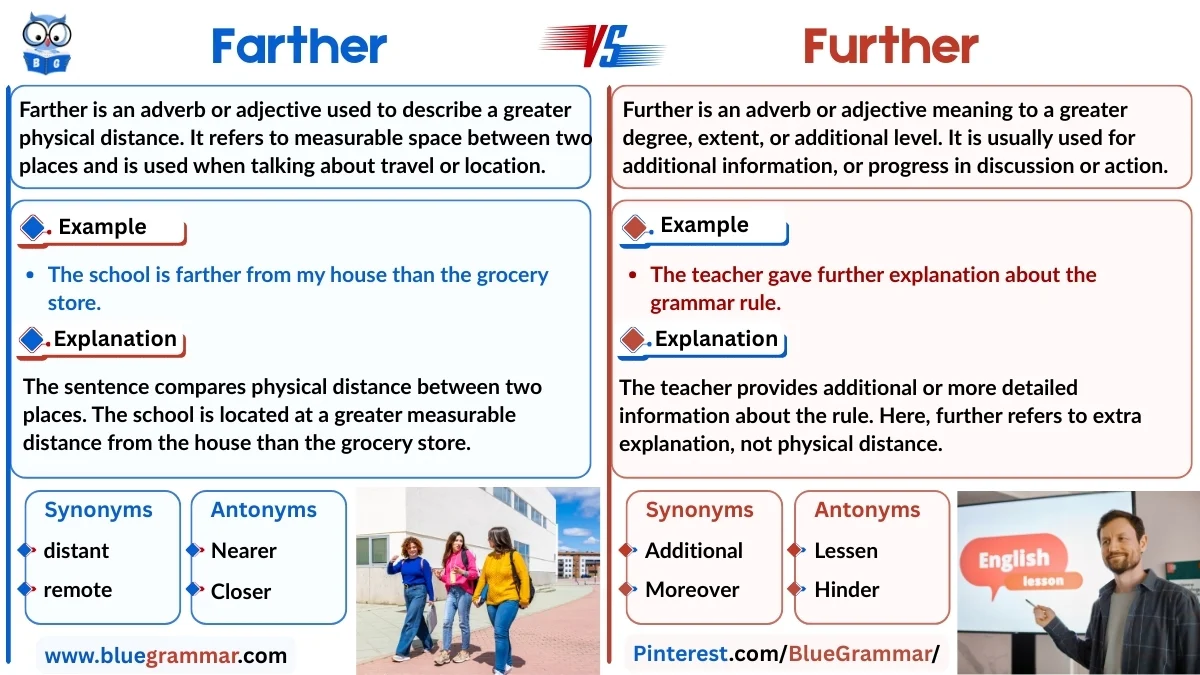
Farther vs Further | Explanation with Examples

Farther vs. Further: Difference and Examples The words farther and further are often confused because they both relate to distance or progress. However, they are used in slightly different contexts. Farther usually refers to physical distance, while further often refers
Read More
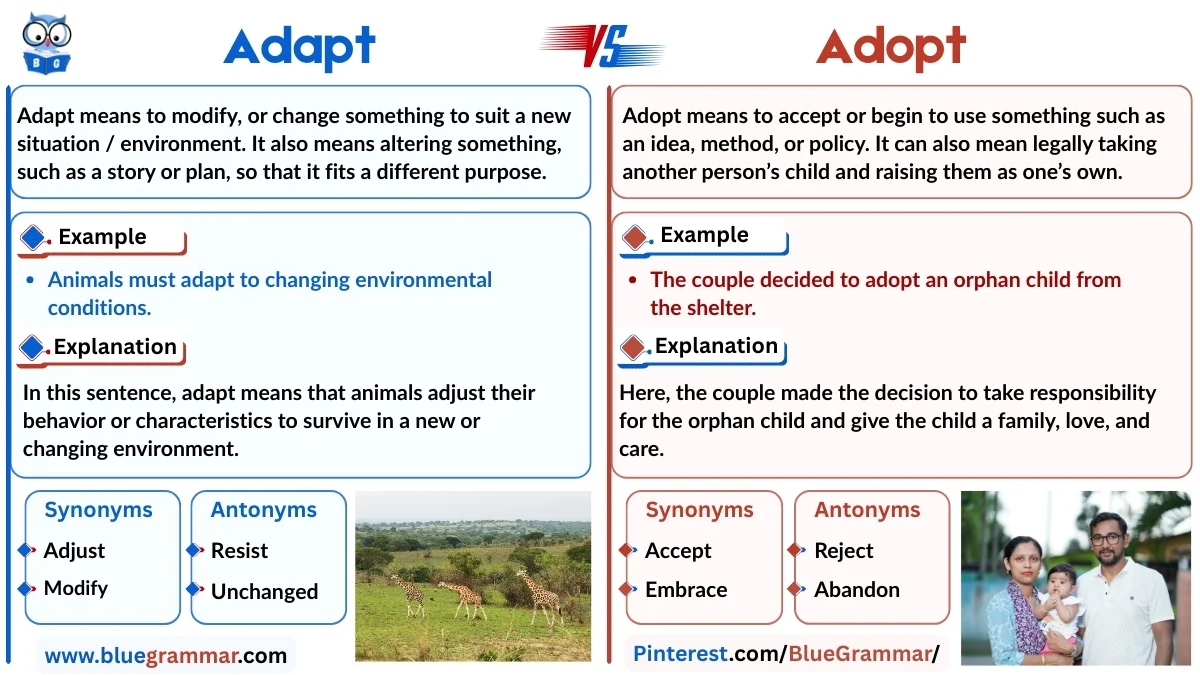
Adapt vs Adopt | Explanation with Examples

Adapt vs. Adopt: Difference and Examples The words adapt and adopt look and sound similar, but they have different meanings and uses. Adapt means to adjust or change something so that it fits a new situation or environment. In contrast,
Read More

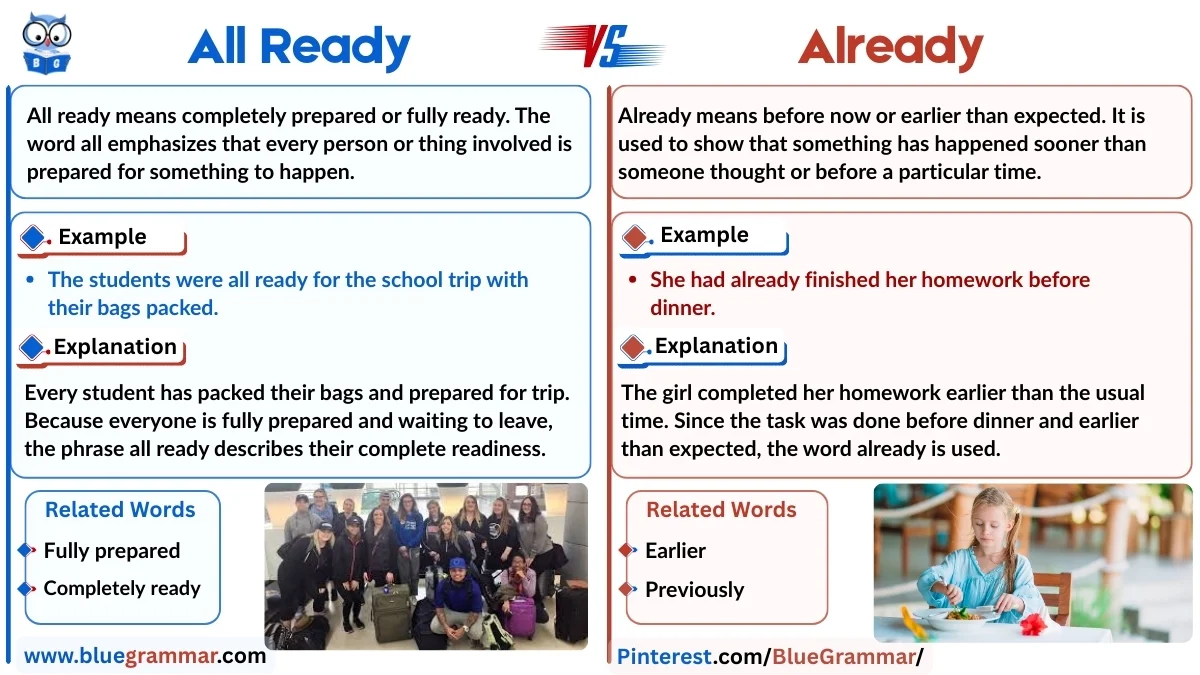
All Ready vs Already | Explanation with Examples

All Ready vs. Already: Difference and Examples The expressions all ready and already look very similar, but they have different meanings and uses. All ready means that everyone or everything is completely prepared. In contrast, already is an adverb that
Read More

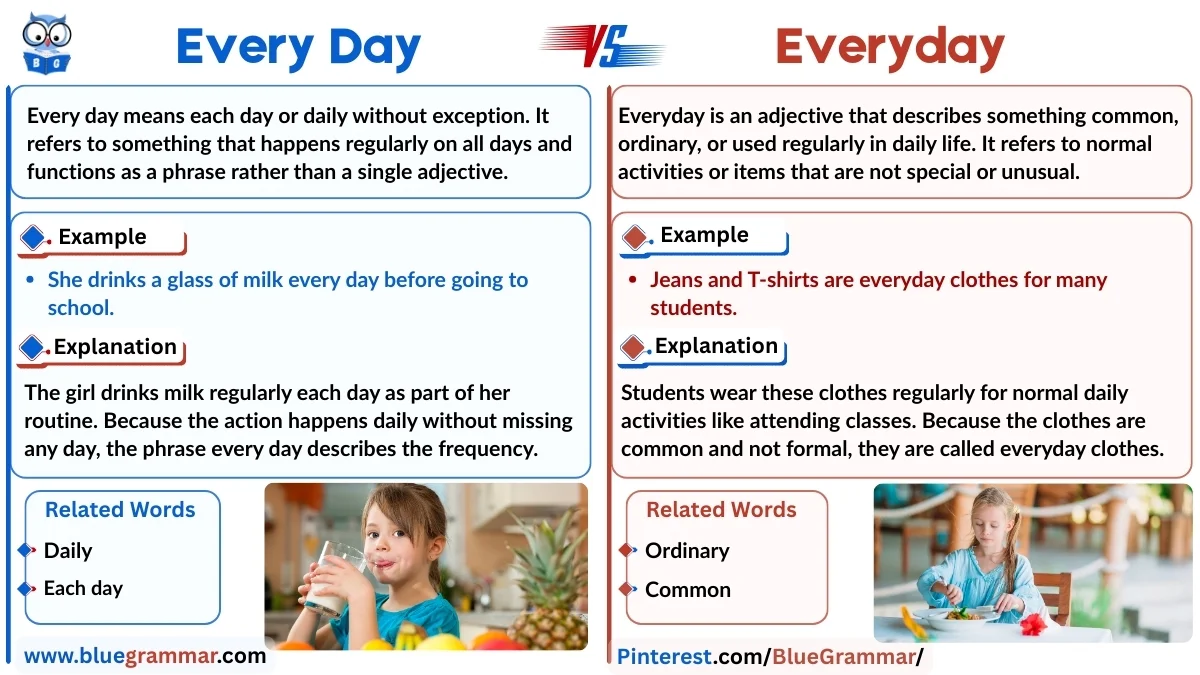
Every Day vs Everyday | Explanation with Examples

Every Day vs. Everyday: Difference and Examples The expressions every day and everyday look almost the same, but they have different meanings and uses. Every day refers to something that happens each day or daily. In contrast, everyday is an
Read More

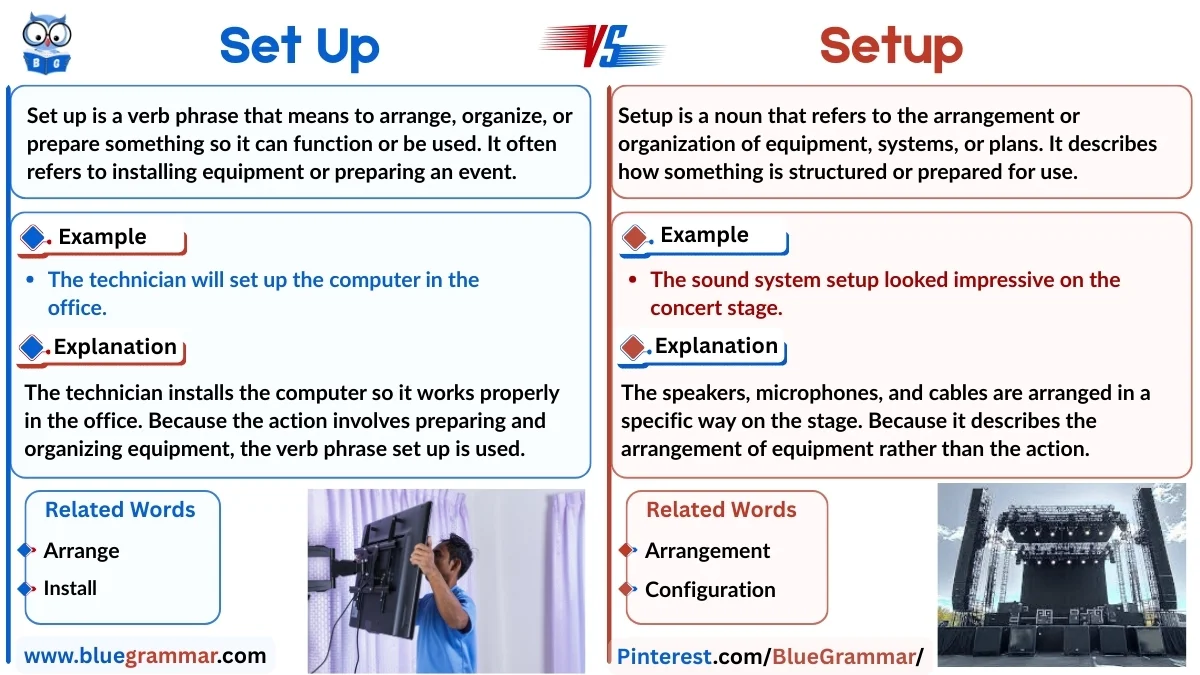
Set Up vs Setup | Explanation with Examples

Set Up vs. Setup: Difference and Examples The expressions set up and setup look very similar, but they are used in different ways in English. Set up is usually a verb phrase that means to arrange, organize, or prepare something.
Read More

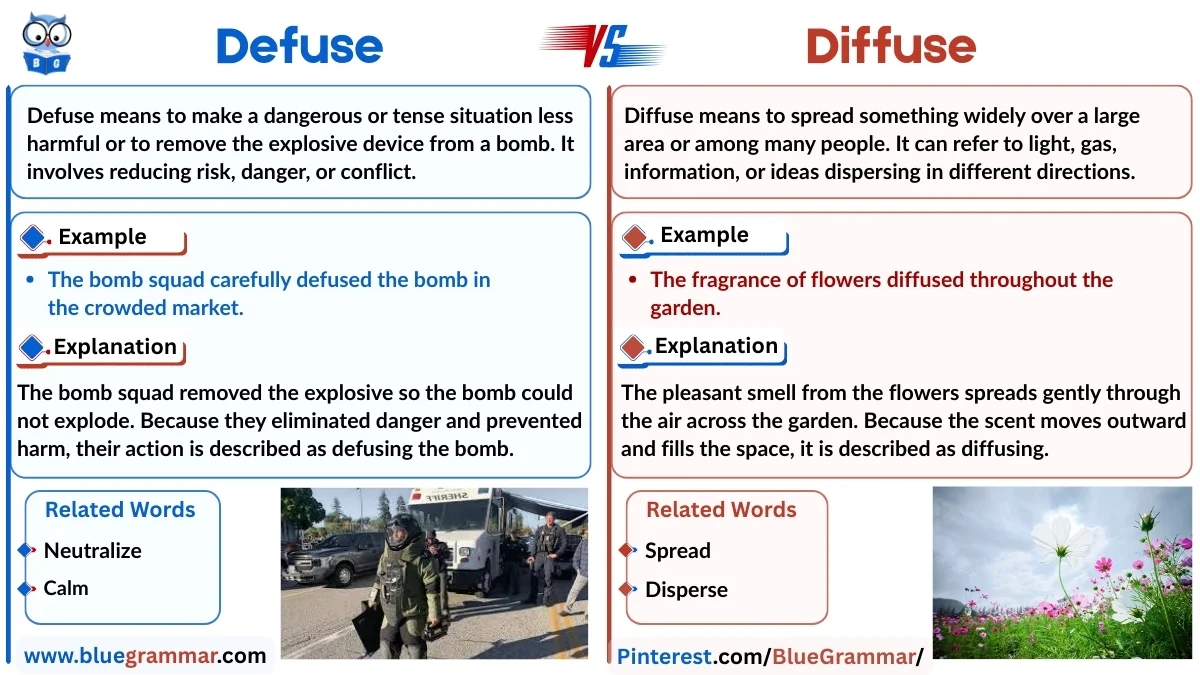
Defuse vs Diffuse | Explanation with Examples

Defuse vs. Diffuse: Difference and Examples The words defuse and diffuse look and sound very similar, but they have different meanings and uses. Defuse means to make a dangerous or tense situation calmer or less harmful, or to remove the
Read More

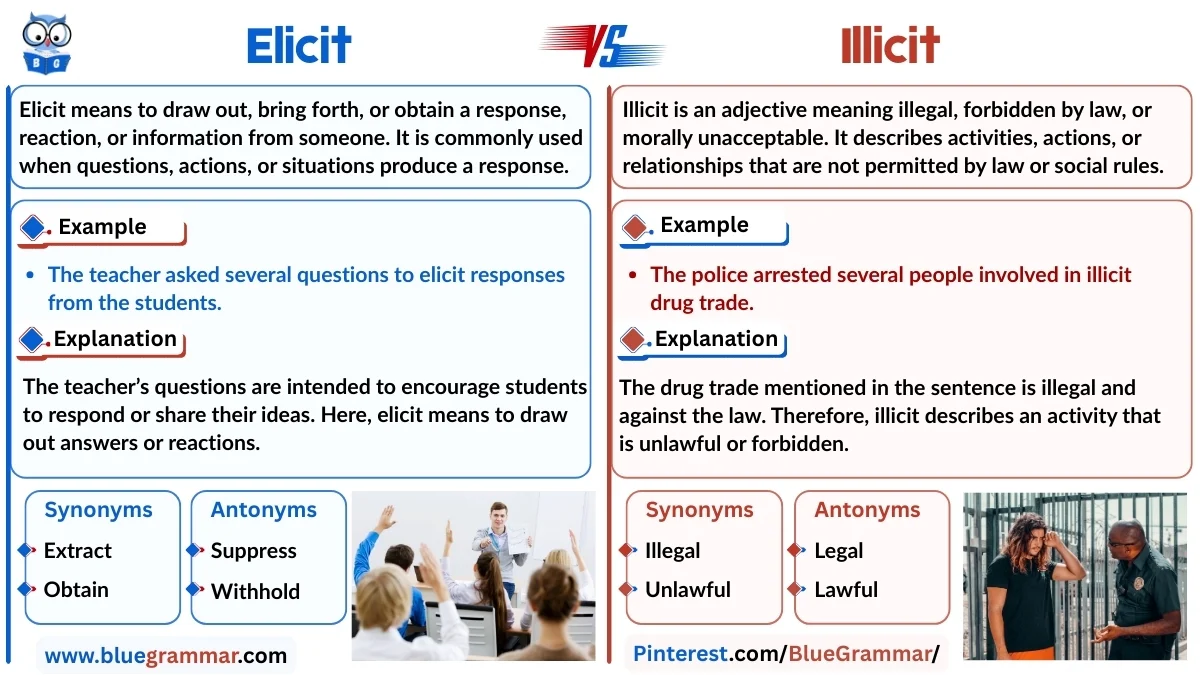
Elicit vs Illicit | Explanation with Examples

Elicit vs. Illicit: Difference and Examples The words elicit and illicit look and sound somewhat similar, but they have very different meanings. Elicit is a verb that means to draw out or obtain a response, reaction, or information from someone.
Read More

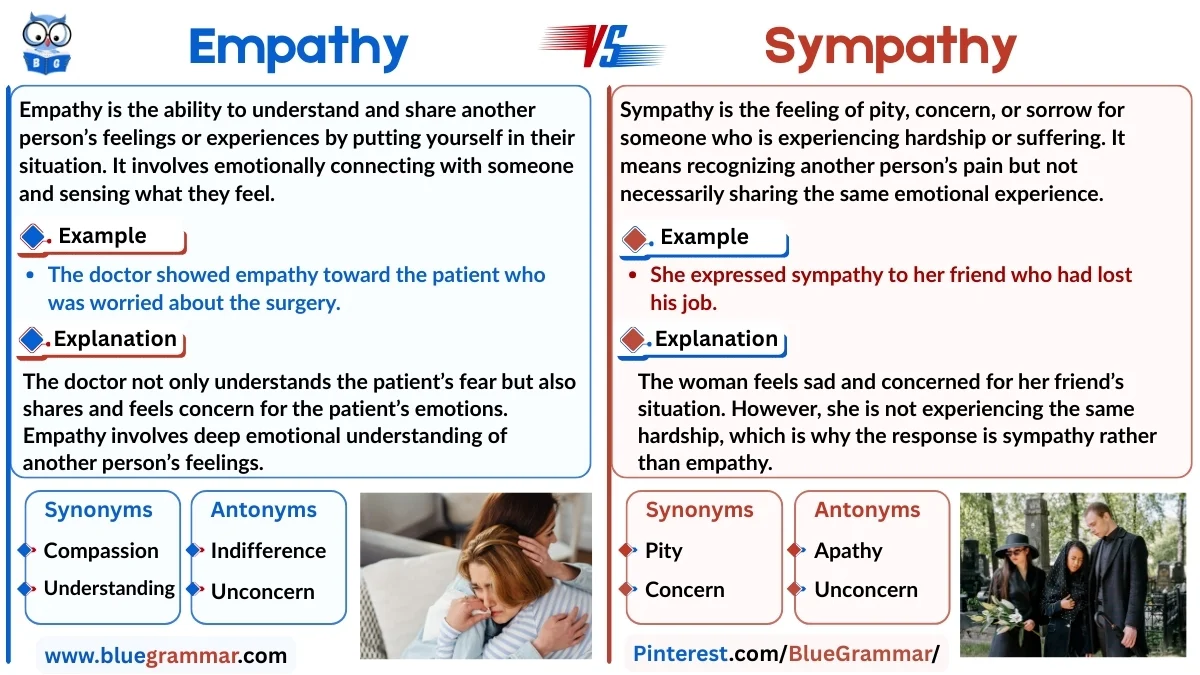
Sympathy vs Empathy | Explanation with Examples

Sympathy vs. Empathy: Difference and Examples The words sympathy and empathy are often used when talking about understanding someone else’s feelings. Although they are related, their meanings are different. Sympathy means feeling concern or sorrow for someone else’s suffering, while
Read More