
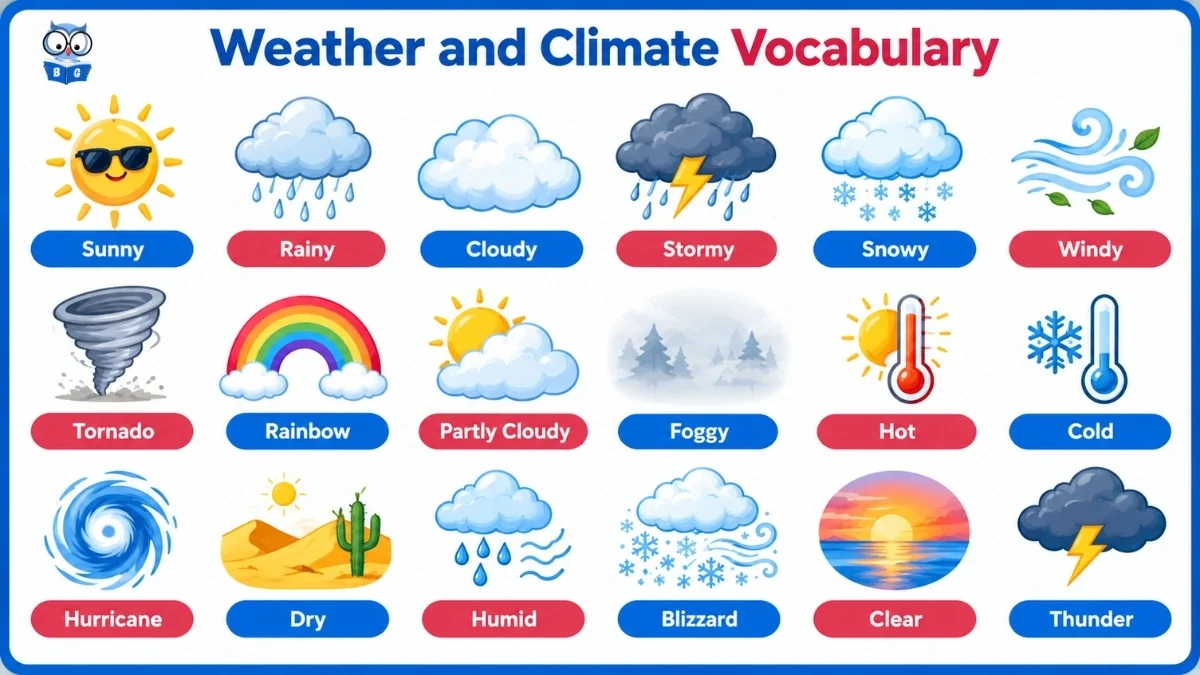
What Is Weather Vocabulary?
Weather vocabulary encompasses words used to describe atmospheric conditions, temperature, meteorological phenomena, seasonal changes, and extreme natural events. Understanding these terms helps in daily communication, reading weather forecasts, and discussing climate phenomena accurately.
Essential Weather and Meteorology Vocabulary
Below is a comprehensive, structured guide to common weather terms, atmospheric phenomena, and meteorological expressions. Each entry includes the word's part of speech, a clear definition, an elaboration on how the term is used, and a realistic example sentence.
1. Avalanche (n)
Definition: A large mass of ice, snow, and rock falling rapidly down a mountainside.
Elaboration: Avalanches occur when a layer of snow breaks off and slides down a steep slope, posing significant hazards to mountain travelers and vehicles.
Example: An avalanche buried their car, but luckily, they remained safe.
2. Barometer (n)
Definition: An instrument used for measuring atmospheric pressure and predicting weather changes.
Elaboration: Meteorologists and navigators use barometers to track pressure drops, which often indicate approaching storms or wind speed shifts.
Example: The air speed registered 50 knots as the barometer indicated a rapid drop in pressure.
3. Blizzard (n)
Definition: A severe snowstorm characterized by strong winds and low visibility lasting for a long time.
Elaboration: Blizzards combine freezing temperatures, heavy snowfall, and high-velocity winds, making travel extremely hazardous.
Example: We postponed our hiking plan due to the weather forecast for a blizzard.
4. Breeze (n)
Definition: A light, gentle, and refreshing wind.
Elaboration: Unlike harsh or gusty winds, a breeze is pleasant and typical of coastal regions or mild afternoons.
Example: We take a walk daily along the seashore to enjoy the cool breeze.
5. Chilly (adj)
Definition: Uncomfortably cold or crisp.
Elaboration: Chilly describes temperatures that are noticeably cold enough to require extra clothing, though not completely freezing.
Example: It is a bit chilly outside, so I think you should stay inside.
6. Clear (adj)
Definition: Unclouded, bright, and free from mist or rain.
Elaboration: Clear skies offer unrestricted visibility and ample sunlight, free from cloud cover or smog.
Example: In our country, the weather normally remains clear during autumn.
7. Cloudy (adj)
Definition: Covered with or characterized by clouds.
Elaboration: Cloudy conditions occur when a significant portion of the sky is obscured by clouds, blocking direct sunlight.
Example: I love cloudy weather during the summer season especially.
8. Cyclone (n)
Definition: A large, destructive system of winds rotating inward to an area of low atmospheric pressure.
Elaboration: Cyclones produce violent winds, torrential rains, and oceanic surges, often leading to severe maritime damage.
Example: An Indian ship, along with nine passengers, was lost in the sea due to a cyclone.
9. Dew (n)
Definition: Tiny drops of water that form on cool surfaces at night due to atmospheric condensation.
Elaboration: Dew is typically seen in the early morning resting on grass, leaves, and vehicles as overnight temperature drops cause water vapor to condense.
Example: The grass across the entire field was damp with morning dew.
10. Drizzling (v)
Definition: Raining lightly in tiny, fine droplets.
Elaboration: Drizzling represents a continuous, soft precipitation lighter than a standard rain shower.
Example: When I woke up, it was drizzling outside, so I decided to sleep a bit longer.
11. Drought (n)
Definition: A prolonged period of abnormally low rainfall, leading to a shortage of water.
Elaboration: Droughts severely impact agriculture, water supplies, and ecosystems due to dry soil conditions over months or years.
Example: There was a prolonged drought, creating widespread fear of crop failure.
12. Flood (n)
Definition: An overflow of a large amount of water beyond its normal limits onto dry land.
Elaboration: Floods usually result from intense, prolonged rainfall or overflowing riverbanks, posing danger to infrastructure.
Example: Due to continuous heavy rain, the river level rose to a critical flood stage.
13. Fog (n)
Definition: A thick cloud of tiny water droplets suspended in the atmosphere near the earth's surface that obscures visibility.
Elaboration: Fog forms close to the ground, significantly impairing vision for drivers, pilots, and pedestrians.
Example: We could not see the tower because the fog was too dense.
14. Foggy (adj)
Definition: Full of or characterized by fog.
Elaboration: Describing atmospheric conditions where visual clarity is severely limited due to suspended moisture.
Example: It is extremely foggy outside, so drive carefully with your headlights on.
15. Forecast (n / v)
Definition: A prediction or calculation of future weather conditions made by meteorologists.
Elaboration: Weather forecasts analyze atmospheric data to estimate precipitation, temperature, and storm risks over coming days.
Example: Meteorologists forecast that there will be no rain next week.
16. Frost (n)
Definition: A thin deposit of ice needles formed on freezing surfaces when water vapor freezes directly.
Elaboration: Frost creates a sparkling coating on ground foliage during freezing nights and can damage delicate plants.
Example: The lawn was covered with sparkling frost early in the morning.
17. Hail (n)
Definition: Pellets of frozen rain falling in showers from cumulonimbus clouds.
Elaboration: Hail consists of solid ice balls created during severe thunderstorms, often causing structural or vehicle damage.
Example: The hail was so intense that several car windshields were shattered.
18. Heat Stroke (n)
Definition: A severe medical emergency caused by prolonged exposure to high temperatures resulting in overheating.
Elaboration: Heat stroke occurs when body temperature regulation fails, requiring immediate hydration and shade.
Example: Drink plenty of water and wear a protective hat to avoid heat stroke in hot weather.
19. Heat Wave (n)
Definition: A prolonged period of excessively hot and humid weather.
Elaboration: Heat waves strain power grids, dry out crops, and increase risks of heat-related illnesses across communities.
Example: During the summer heat wave, local health authorities issued high-temperature advisories.
20. Humid (adj)
Definition: Containing a high amount of water vapor or moisture in the air.
Elaboration: Humid air feels muggy and sticky, making warm temperatures feel significantly hotter than the actual thermometric reading.
Example: The air was so humid that our clothes felt damp within minutes of walking.
21. Humidity (n)
Definition: The state or measure of water vapor present in the atmosphere.
Elaboration: High relative humidity reduces moisture evaporation from skin, intensifying the sensation of heat.
Example: It feels much warmer outside than it actually is because of the high humidity.
22. Hurricane (n)
Definition: A tropical storm with violent winds, rain, and low pressure, typically in the Atlantic basin.
Elaboration: Hurricanes bring destructive winds exceeding 74 mph along with severe flooding to coastal regions.
Example: The category-four hurricane damaged dozens of buildings along the coastal town.
23. Icy (adj)
Definition: Covered with or consisting of ice; slippery and freezing.
Elaboration: Icy surfaces create slick hazards on roads and footpaths, slowing transport and increasing accident risks.
Example: The mountain pass was icy, so it took us four hours to reach home.
24. Lightning (n)
Definition: A powerful naturally occurring electrostatic discharge produced during an atmospheric storm.
Elaboration: Lightning strikes emit sudden high-voltage flashes accompanied by rapid thermal expansion of air, producing thunder.
Example: It is dangerous to remain in outdoor swimming pools during a lightning storm.
25. Mild (adj)
Definition: Moderately warm or gentle weather, particularly during cold seasons.
Elaboration: Mild weather lacks severe cold or extreme heat, offering pleasant conditions for outdoor activity.
Example: It is quite mild today, so I went for a long afternoon walk.
26. Meteorologist (n)
Definition: An expert or scientist who studies atmospheric phenomena and forecasts weather conditions.
Elaboration: Meteorologists evaluate radar, pressure maps, and satellite data to predict daily weather shifts.
Example: The meteorologist predicted that the heat wave would subside by Monday.
27. Meteorology (n)
Definition: The branch of science concerned with processes and phenomena of the atmosphere, especially for forecasting.
Elaboration: Meteorology utilizes advanced computer modeling and satellites to enhance real-time weather monitoring.
Example: Modern meteorology provides far more accurate warnings for approaching storms.
28. Partly Cloudy (adj + adv)
Definition: Atmospheric condition where clouds cover part of the sky while sun remains visible.
Elaboration: Used in weather reporting to describe intermittent sun interspersed with cloud formations.
Example: Tomorrow’s forecast is partly cloudy in hilly regions and clear along the coastline.
29. Rainbow (n)
Definition: An arch of colors formed in the sky by refraction and dispersion of the sun's light through rain droplets.
Elaboration: Rainbows display seven spectral colors when sunlight hits airborne moisture at specific angles.
Example: Children took pictures of the vibrant rainbow visible after the morning rain.
30. Shower (n)
Definition: A brief fall of rain, heavier than drizzle but usually short-lived.
Elaboration: Rain showers arrive suddenly and clear quickly compared to widespread, day-long rainfall systems.
Example: Morning drizzling transitioned into a steady rain shower that lasted two hours.
31. Sleet (n)
Definition: Rain containing ice pellets or partially frozen raindrops falling in freezing atmospheric conditions.
Elaboration: Sleet occurs when falling snow passes through a warm layer and refreezes before hitting the ground.
Example: Driving becomes treacherous when snow turns into sleet on the highway.
32. Slush (n)
Definition: Partially melted, soft, watery snow lying on ground surfaces.
Elaboration: Slush builds up on sidewalks and roadways after snow starts thawing or mixes with rain.
Example: Thick slush covered the footpaths, making walking difficult for pedestrians.
33. Smog (n)
Definition: Fog combined with smoke or other atmospheric pollutants.
Elaboration: Smog forms over urban or industrial regions, producing haze and poor air quality conditions.
Example: The city’s winter smog was so heavy that it lingered well past noon.
34. Snow (n)
Definition: Atmospheric water vapor frozen into ice crystals and falling in light white flakes.
Elaboration: Snow accumulates during freezing weather, blanketing terrain in soft white layers.
Example: Fresh snow blanketed the trees across the mountain resort.
35. Snowing (v)
Definition: The active precipitation of snow falling from clouds.
Elaboration: Refers to ongoing snowfall in progress during cold winter storms.
Example: It is already snowing up in town, so you should wait here until it stops.
36. Snowstorm (n)
Definition: A heavy snowfall accompanied by strong winds.
Elaboration: Snowstorms reduce travel capabilities and lead to deep snow accumulation across towns.
Example: The local marketplace remained closed for the day because of the snowstorm.
37. Sunshine (n)
Definition: Direct sunlight uninterrupted by cloud cover.
Elaboration: Sunshine provides natural heat and light, lifting atmospheric warmth during clear days.
Example: Let us head outside and enjoy the warm sunshine before clouds roll in.
38. Sunny (adj)
Definition: Bright with or lit by direct sunlight.
Elaboration: Characterized by open, clear skies with vibrant daylight.
Example: We chose a sunny spot in the garden to sit for lunch.
39. Tornado (n)
Definition: A violent, rotating column of air extending from a thunderstorm to the ground.
Elaboration: Tornadoes generate localized, extremely high wind speeds capable of lifting structures and debris.
Example: The tornado destroyed structures along its narrow path, lifting heavy vehicles.
40. Torrential Rain (n)
Definition: Exceptionally heavy, intense, and rapid rainfall.
Elaboration: Torrential rain drops vast volumes of water in a brief window, rapidly causing urban runoff.
Example: Highway police diverted traffic away from low-lying routes due to torrential rain.
41. Tsunami (n)
Definition: A long, high sea wave caused by an underwater earthquake or volcanic disturbance.
Elaboration: Tsunamis travel rapidly across oceanic basins before inundating coastal areas with tremendous force.
Example: Coastal areas were evacuated following warnings of a potential tsunami after the earthquake.
42. Thunder (n)
Definition: A loud rumbling or crashing sound heard after a flash of lightning.
Elaboration: Thunder is produced by rapid air expansion along the path of an electrical lightning strike.
Example: Children covered their ears at the sudden crash of thunder during the storm.
43. Thunderstorm (n)
Definition: A storm characterized by the presence of lightning, thunder, and heavy precipitation.
Elaboration: Thunderstorms involve energetic vertical cloud developments accompanied by gusty surface winds.
Example: Remember to close all windows securely before a thunderstorm begins.
44. Typhoon (n)
Definition: A tropical cyclone occurring in the northwestern Pacific region.
Elaboration: Typhoons are equivalent to hurricanes in structure, generating severe winds and hazardous seas.
Example: Maritime transport was suspended across the region due to the approaching typhoon.
45. Windy (adj)
Definition: Characterized by strong or brisk atmospheric air currents.
Elaboration: Describes surface conditions where air moves rapidly across open land or city streets.
Example: It is far too windy outside to play outdoor sports today.