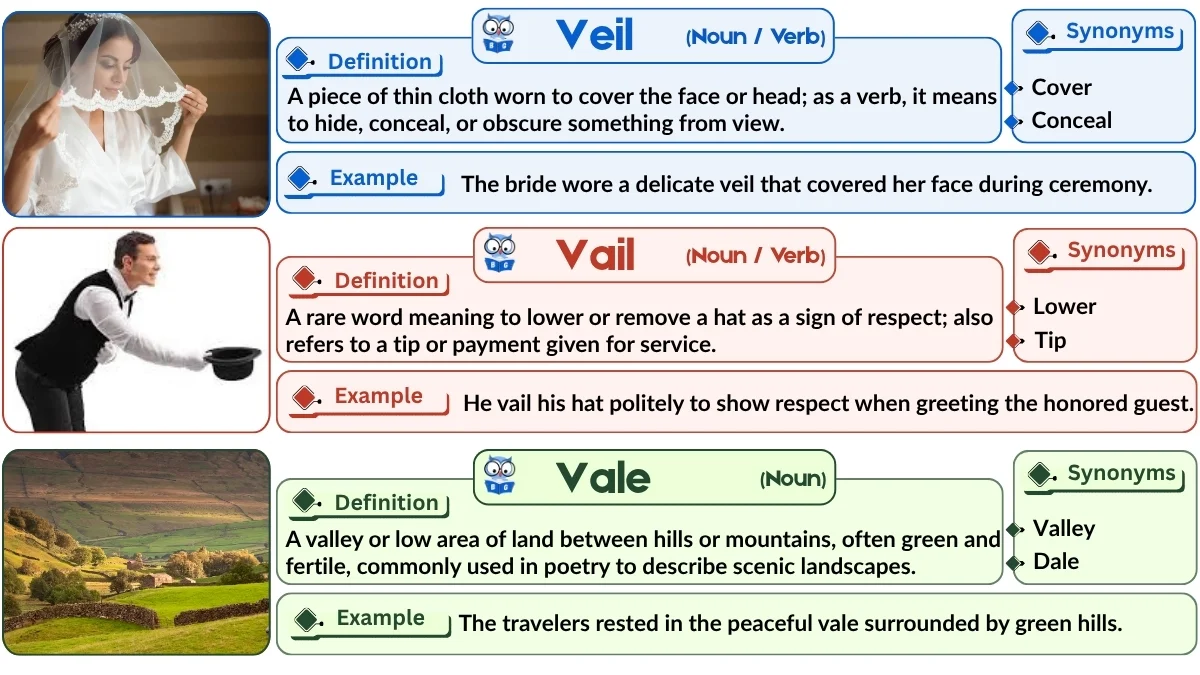
Vale vs. Veil vs. Vail: Difference and Examples
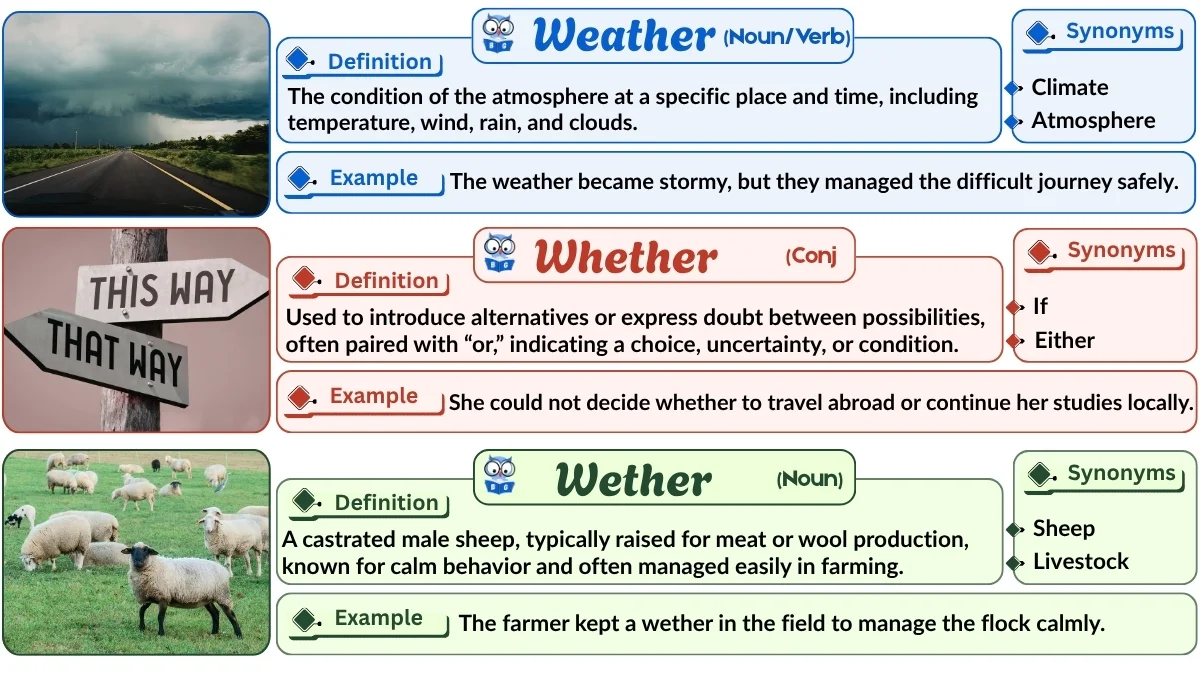
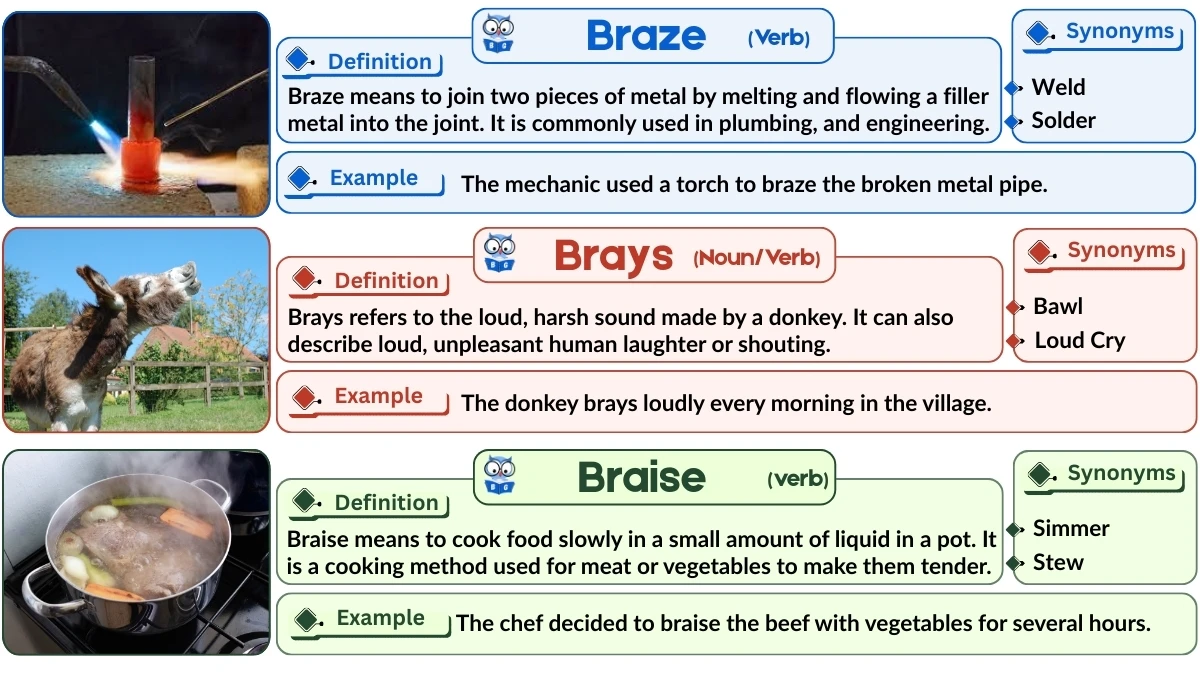
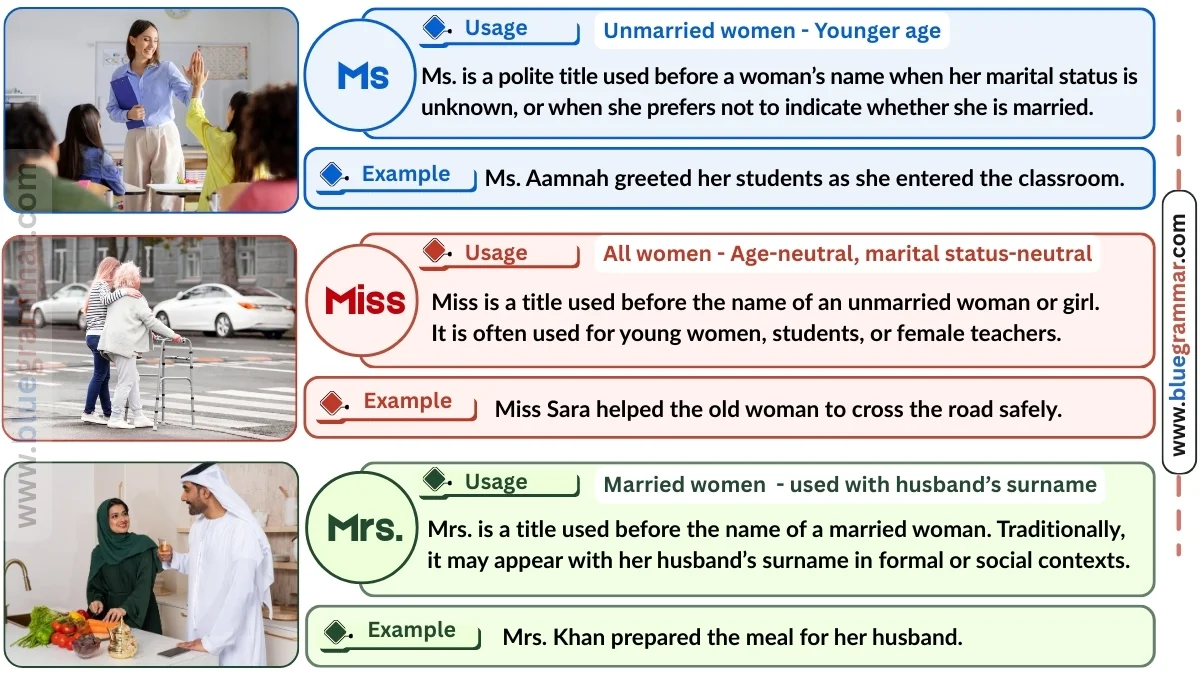
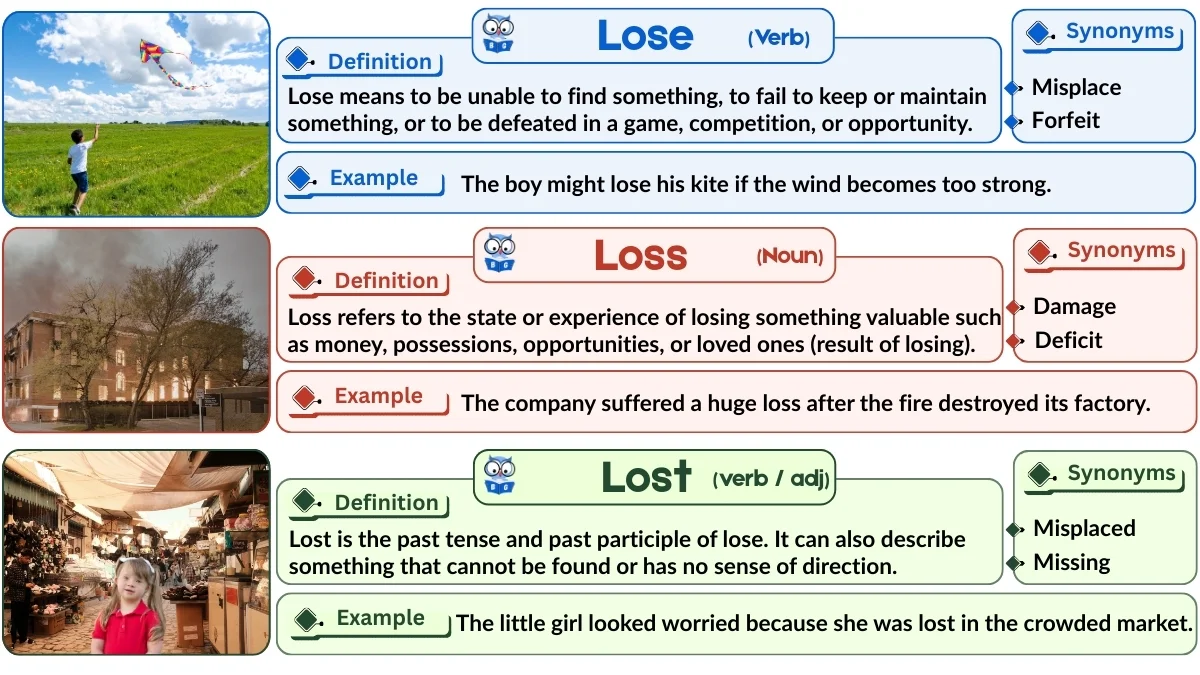
English learners often confuse vale, veil, and vail because they sound similar but have very different meanings. These words are used in different contexts, including geography, clothing, and formal or literary language. A small spelling mistake can completely change the meaning of a sentence. "Vale" usually refers to a valley, while "veil" is something that covers or hides. On the other hand, "vail" is a less common word used in formal or archaic contexts. Let’s explore each word in detail to understand their correct usage.
1. Vale
Meaning & Part of Speech: Noun — A valley, typically used in literary, poetic, or geographical contexts.
Explanation: "Vale" is a noun that means a valley, often used in literary or poetic language. It refers to a low area of land between hills or mountains. This word is not very common in everyday conversation but is often found in literature and descriptive writing. It gives a more artistic or poetic tone to the sentence.
Example: The village lay peacefully in a green vale surrounded by hills.
Explanation: In this sentence, vale refers to a valley, emphasizing a calm and scenic natural setting.
More Examples:
- A quiet vale stretched beyond the forest.
- The travelers rested in a beautiful vale.
- The mist covered the entire vale at dawn.
- Poets often describe love as a journey through a vale.
Related Words: Valley, Lowland, Basin, Hollow, Dale
2. Veil
Meaning & Part of Speech: Noun & Verb — A length of cloth worn over the head or face for protection, concealment, or ceremonial reasons; or to cover, disguise, or hide something.
Explanation: "Veil" is a noun and sometimes a verb. As a noun, it refers to a piece of cloth used to cover the face or head, often worn for cultural or ceremonial reasons. As a verb, it means to hide or conceal something. This word is commonly used in both literal and figurative contexts.
Example: The bride wore a delicate veil over her face.
Explanation: Here, veil refers to a thin piece of cloth covering the bride’s face as part of a wedding tradition.
More Examples:
- A thin veil covered the mountains in the morning mist.
- She lifted her veil slowly.
- The truth was veiled in secrecy.
- Clouds formed a veil over the sky.
Related Words: Cover, Conceal, Mask, Hide, Cloak, Screen
3. Vail
Meaning & Part of Speech: Verb (Archaic) — To lower, lower in token of respect or submission, or remove (such as a hat or crown).
Explanation: "Vail" is an archaic or literary verb that means to lower or take off something as a sign of respect or submission. It is an old-fashioned word rarely used in modern everyday English but occasionally found in historical literature, Shakespeare, or classical poetry (e.g., to "vail one's bonnet"). It can also refer to a gratuity or tip in historical prose.
Example: He vailed his hat before the king as a sign of respect.
Explanation: In this sentence, vailed means lowered or removed the hat to show respect.
More Examples:
- The knight vailed his helmet before the queen.
- Soldiers vailed their flags in honor of the hero.
- He vailed his head in humility.
- In old traditions, people vailed their hats to greet others.
Related Words: Lower, Remove, Bow, Submit, Doff, Yield
Common Mistakes to Avoid
-
Writing Vale Instead of Veil for Headwear or Coverings
Incorrect: The bride wore a lace vale.
Correct: The bride wore a lace veil.
Explanation: Fabric coverings for the face or head use the spelling veil (with 'ei'), whereas a vale is a landscape feature (valley). -
Confusing Veil with Vale in Geographical Descriptions
Incorrect: They hiked across the lush green veil.
Correct: They hiked across the lush green vale.
Explanation: A valley between hills is a vale (ending with 'ale').
Summary
Although vale, veil, and vail sound identical, their context and meanings are very different:
- Vale – A valley between hills or mountains (think of vale as synonymous with dale and valley).
- Veil – A fabric face covering or a barrier that conceals (contains 'ei' like ceiling or height covering above).
- Vail – An archaic verb meaning to lower or doff one's hat/flag in submission or respect.
A simple memory tip: A vale is a peaceful dale (valley), a veil hides from your eyes, and vail is an old-fashioned action when someone bow-s or bow-s lower.
Practice Exercise: Fill in the Blanks Using Vale / Veil / Vail
Choose the correct word (vale, veil, or vail) to complete each sentence:
- The bride covered her face with a __________.
- The village was located in a peaceful __________.
- He decided to __________ his hat as a mark of respect.
- A light mist formed a __________ over the hills.
- The travelers walked through a green __________.