
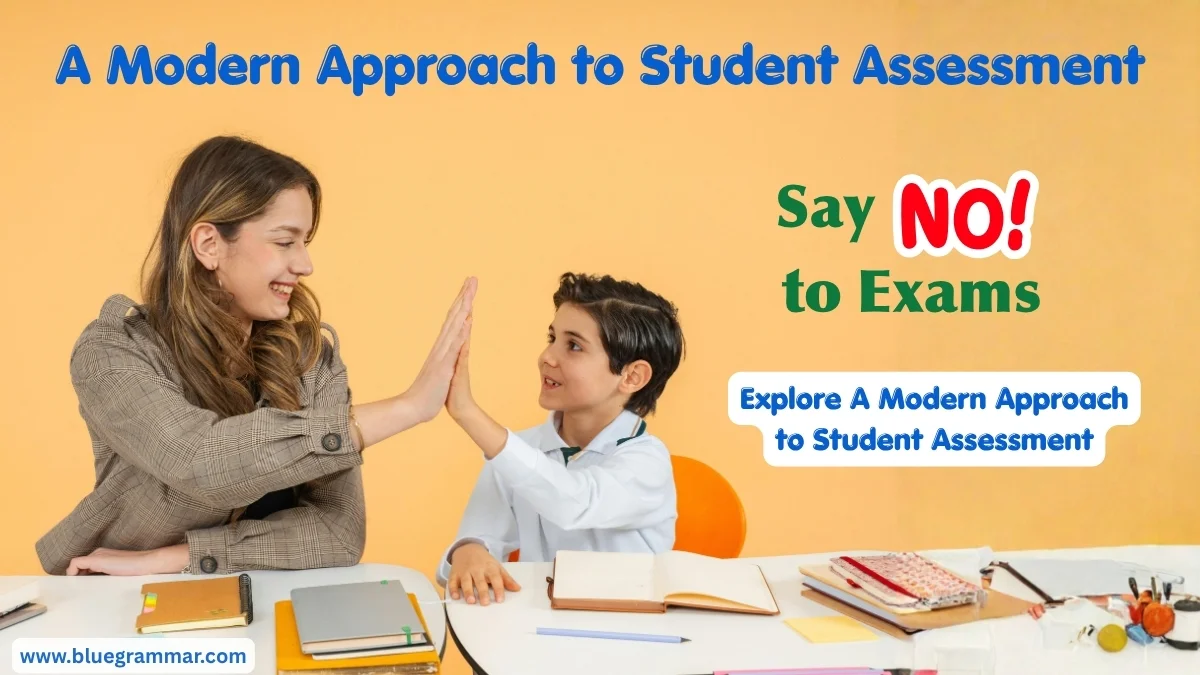
If you have ever watched a student freeze up during exam week—or if you have been that student yourself—you know the feeling. The racing heart, the late-night panic over flashcards, the sinking realization that everything you learned over the past year has been squeezed into a nerve-wracking two-hour sprint.
For generations, we have relied on high-stakes final exams to decide who is smart, who is capable, and who gets a ticket to a bright future. But as classrooms change and the world outside them shifts, an uncomfortable question keeps bubbling up: Are we actually testing what students know, or are we just testing how well they handle pressure?
Traditional exams measure memory and stress tolerance far better than they measure true understanding, problem-solving, or character.
The truth is, traditional exams measure memory and stress tolerance far better than they measure true understanding, problem-solving, or character. If we want to prepare young people for a world that values adaptability over answer-key memorization, we need to rethink how we evaluate them.
Here is what a genuinely modern, compassionate, and effective assessment system looks like in action.
1. Continuous Assessment: Judging the Marathon, Not the Sprint
Imagine training for a marathon for ten months, only to have your entire running career judged on a 100-meter dash on a rainy Tuesday while you have a mild cold. That is precisely how annual exams feel to most students.
A modern approach trades the big "doom-and-gloom" exam at the end of the term for continuous assessment. Instead of putting all the pressure on one high-stakes week, teachers gather evidence of learning every single day through:
- Micro-quizzes and reflection journals that help track progress without the fear of a bad grade ruining a semester.
- In-class discussions and debates where students show they can synthesize ideas on their feet.
- Draft-and-revision cycles that model real life—where nobody gets things perfect on the first try, but iteration makes the work stronger.
When assessment is woven into the daily rhythm of learning, failure stops feeling like a dead end. Instead, it becomes simple feedback on what to try next.
2. Portfolios and Real-World Projects: Showing, Not Just Telling
In 2018, the Mastery Transcript Consortium—a network of hundreds of high schools across the globe—started replacing traditional letter-grade transcripts with digital mastery portfolios. Why? Because a letter grade like "B+" in English tells a future employer or university admissions office almost nothing about what a teenager can actually do.
A modern assessment system leans heavily on project-based learning and digital portfolios. Instead of taking a 50-question multiple-choice test on environmental science, a student might:
- Identify a local issue, such as plastic waste in their school cafeteria or runoff in a nearby creek.
- Conduct field research, analyze the data, and collaborate with local community members.
- Present a practical solution through a written proposal, a podcast, or a prototype.
When a student leaves school with a portfolio filled with actual projects, essays, code, and creative designs, they hold proof of their capability. They do not just have a score—they have a track record.
3. Differentiated Evaluation: Recognizing Different Strengths
We would never ask a carpenter, an illustrator, and a software engineer to take the exact same written test to prove their competence. So why do we expect a class of thirty unique students—each with distinct talents, processing speeds, and learning styles—to show what they know through identical fill-in-the-blank papers?
Fairness does not mean treating everyone identically; it means giving everyone an equal chance to demonstrate their mastery.
Teachers who embrace modern methods offer choice in how students prove their understanding. After finishing a history unit on the Industrial Revolution, for instance, students might choose to:
- Write a traditional analytical essay if they express themselves best through text.
- Construct an interactive digital timeline with primary sources.
- Deliver an oral presentation or record a scripted historical podcast.
The core learning standard remains the same, but the medium adapts to the student's natural strengths.
4. Authentic Feedback Over Cold Percentages
A red circle around a "62%" at the top of a paper communicates one clear message to a student: You failed, now move on. It provides almost no guidance on why the answers were wrong or how to fix them.
Modern evaluation shifts the focus from grading to actionable feedback. Instead of arbitrary numbers, educators use detailed descriptive rubrics that break down performance into clear skills:
- Where you excelled: Strong thesis, clear evidence, logical flow.
- Where you got stuck: Transitioning between paragraphs, citing source material.
- Next steps to take: Re-write section three using two additional supporting quotes.
When students receive specific, constructive direction rather than a permanent score, they start looking at their work through a growth mindset. They learn that competence is not an innate trait you are born with—it is a muscle you build through iteration.
5. Self-Assessment and Peer Collaboration
In the traditional setup, the teacher acts as the sole judge and jury. The student hands over their work, waits in suspense, and receives a grade. This creates a passive dynamic where students focus entirely on "pleasing the teacher" rather than taking ownership of their own growth.
Modern approaches flip this dynamic on its head by building self-assessment and peer review directly into the curriculum:
- Peer Reviews: Students evaluate each other's work using clear rubrics. This teaches them how to give tactful, objective feedback—a crucial skill for any workplace—while helping them spot mistakes in their own thinking.
- Self-Reflections: Before submitting a major project, students write a brief reflection answering questions like: What was the hardest part of this task? What strategy worked best for you? What would you do differently next time?
When young people learn to critically evaluate their own effort, they develop self-awareness and self-direction—traits that stay with them long after they leave the classroom.
The Path Forward: A System Built for Humans
Shifting away from traditional exams does not mean throwing out standards or lowering the bar. In fact, it raises the bar. Memorizing a textbook chapter the night before a test requires short-term effort; designing a real-world project, revising it based on feedback, and defending your work to your peers requires real grit and deep comprehension.
When we replace high-stakes exams with human-centered evaluation, students stop asking, "Is this going to be on the test?" and start asking, "How does this actually work?"
When we replace high-stakes exams with continuous, portfolio-based, and human-centered evaluation, something remarkable happens. The anxiety that suffocates classrooms starts to clear. Students stop asking, "Is this going to be on the test?" and start asking, "How does this actually work?" That simple shift in mindset is where real education finally begins.