
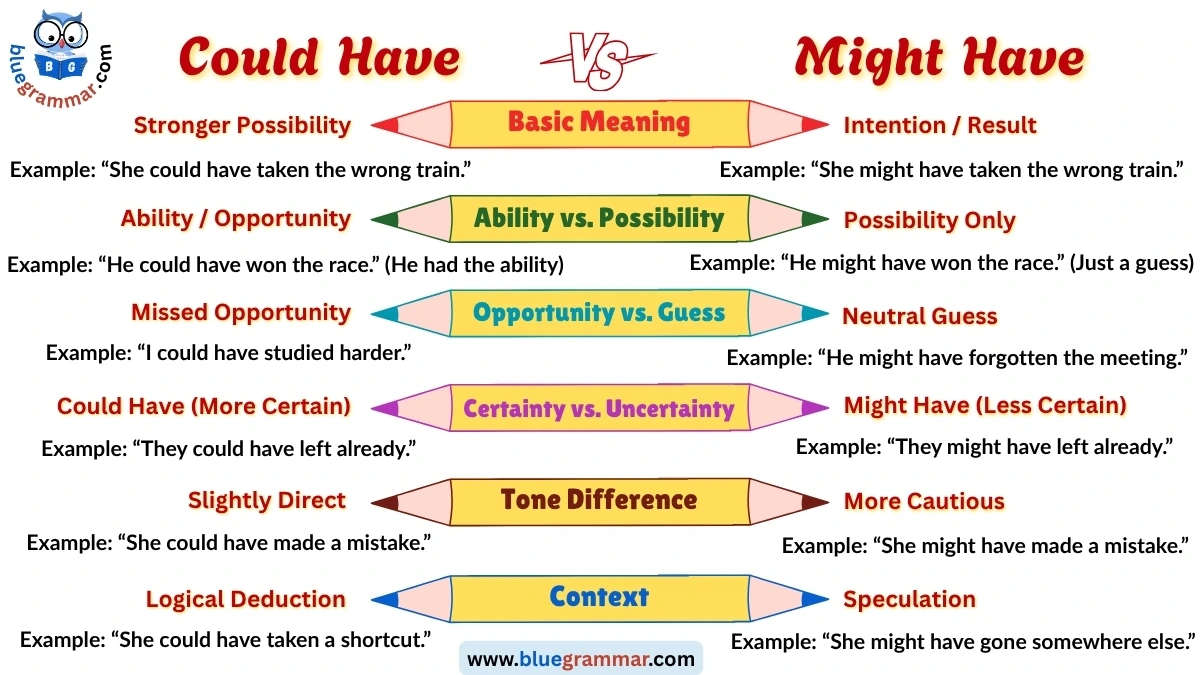
Understanding could have vs. might have is essential for expressing past possibilities correctly in English. Both forms are used to talk about things that may have happened, but they differ in certainty, tone, and meaning. While could have often suggests a stronger or more realistic possibility, might have expresses more doubt or uncertainty.
1. Basic Meaning: Possibility vs. Weaker Possibility
Both could have and might have are used to talk about possible events in the past, especially when we are not sure what actually happened. However, could have usually suggests a stronger or more realistic possibility, meaning the speaker believes the event was quite possible. Might have, on the other hand, expresses a weaker or more doubtful possibility, indicating that the chance was lower or more uncertain. In everyday English, the difference can be subtle, but might have generally sounds more cautious.
- Could Have (Stronger Possibility):
Example: “She could have taken the wrong train.” - Might Have (Weaker Possibility):
Example: “She might have taken the wrong train.”
2. Ability vs. Possibility in the Past
One important distinction is that could have can sometimes carry a sense of ability in the past, while might have does not. Could have may suggest that someone had the ability or opportunity to do something, even if they didn’t actually do it. Might have, however, is only used to express possibility and does not imply ability. This makes could have slightly more flexible in meaning.
- Could Have (Ability/Opportunity):
Example: “He could have won the race.” (He had the ability) - Might Have (Possibility Only):
Example: “He might have won the race.” (Just a guess)
3. Missed Opportunities vs. Simple Guess
Could have is often used to talk about missed opportunities—things that were possible in the past but did not happen. It can carry a sense of regret or disappointment. Might have, however, is usually used for neutral guesses about the past without any emotional tone. It simply suggests what may have happened, without implying that something should have happened.
- Could Have (Missed Opportunity):
Example: “I could have studied harder.” - Might Have (Neutral Guess):
Example: “He might have forgotten the meeting.”
4. Certainty vs. Uncertainty
Although both forms express uncertainty, could have often sounds slightly more confident than might have. When using could have, the speaker usually believes there was a real possibility. In contrast, might have is used when the speaker is less sure and wants to sound more cautious. This difference helps control how strong or weak your statement sounds.
- Could Have (More Certain):
Example: “They could have left already.” - Might Have (Less Certain):
Example: “They might have left already.”
5. Tone: Slightly Direct vs. More Cautious
The choice between could have and might have also affects tone. Could have sounds a bit more direct and confident, especially when suggesting what was possible. Might have sounds softer, more polite, and more tentative. This makes might have a safer choice when you want to avoid sounding too certain.
- Could Have (Direct):
Example: “She could have made a mistake.” - Might Have (Cautious):
Example: “She might have made a mistake.”
6. Questions: Common vs. Less Common
Could have is more commonly used in questions when asking about past possibilities or abilities. It sounds natural in conversation when trying to understand what happened. Might have can also be used in questions, but it is less common and may sound slightly more formal or cautious. In most cases, could have is preferred in everyday questions.
- Could Have (Common Question):
Example: “Could he have missed the train?” - Might Have (Less Common Question):
Example: “Might he have missed the train?”
7. Negative Forms: Couldn’t Have vs. Might Not Have
The negative forms also show a difference in certainty. Couldn’t have is used when the speaker believes something was impossible in the past. It expresses strong certainty that an event did not happen. Might not have, however, expresses uncertainty and suggests that something possibly did not happen, but the speaker is not sure.
- Couldn’t Have (Impossible):
Example: “He couldn’t have finished the work so quickly.” - Might Not Have (Uncertain Negative):
Example: “He might not have finished the work.”
8. Context: Logical Deduction vs. Speculation
Could have is often used when making logical guesses based on evidence or reasoning. It suggests that the speaker is thinking about realistic possibilities. Might have, on the other hand, is used more for speculation without strong evidence. It is commonly used when the speaker is unsure and simply considering different possibilities.
- Could Have (Reasoned Guess):
Example: “She could have taken a shortcut.” - Might Have (Speculation):
Example: “She might have gone somewhere else.”
Quick Comparison Summary | Could Have vs. Might Have
| Feature | Could Have | Might Have |
|---|---|---|
| Possibility Level | Stronger / Realistic past possibility. | Weaker / More doubtful past possibility. |
| Past Ability / Opportunity | Expresses ability or missed opportunity. | Does NOT express past ability. |
| Deduction Style | Logical guess based on evidence/reasoning. | Pure speculation without strong evidence. |
| Tone & Confidence | Direct, confident, reasonable. | Soft, cautious, tentative. |
| Negative Meaning | Couldn't have = Strong certainty (Impossible). | Might not have = Uncertainty (Possibly didn't). |
Pro Tip: Use could have when talking about past ability, missed opportunities, or logical deductions based on evidence. Use might have when making tentative, speculative guesses where you want to emphasize uncertainty.